Get Full Government Meeting Transcripts, Videos, & Alerts Forever!
Get email alerts on the SB115 Mobile Home Relocation topic
No spam. Unsubscribe anytime.
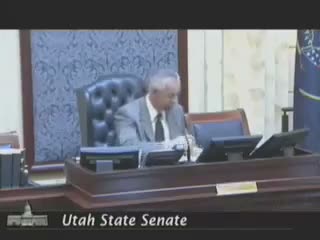
Senate circles bill to help cities finance mobile-home park resident relocation after extended debate
Summary
Senate Bill 115, proposing an incremental tax-style tool to help local governments finance relocation costs for mobile-home-park residents, drew extended floor debate over developer responsibility and government role and was circled for further work.
Senate Bill 115, introduced by Senator Niederhauser, would create a tax-increment style vehicle allowing a municipality or county to work with developers to fund relocation expenses for residents of mobile-home parks facing redevelopment. The sponsor described the tool as optional for taxing entities and aimed at giving cities another option to help residents who face expensive moves.
On the floor senators raised economic, equity and precedent concerns. Supporters said many mobile-home residents are low-income and moving a mobile home can cost roughly $8,000; the bill would give local governments and developers a mechanism to help with that financial burden during redevelopment. Senator McCoy praised the measure as a "win-win" that vindicates property rights while offering compassion to displaced residents.
Opponents warned the proposal risks expanding government responsibility and could set a precedent for other displaced occupants. Senator Jenkins said he opposed the bill in committee because it represents government overreach and argued that developers should bear relocation costs. Senator Madsen and others questioned whether similar protections exist for renters or condominium owners who may also be displaced and cautioned about unintended precedent.
Sponsor Niederhauser and others said the bill streamlines tools already available under community-development authority (CDA) law, but would make funds available more quickly in urgent displacement situations. After extended debate about scope and municipal participation, the sponsor moved to circle the bill to work through concerns; the motion carried and SB115 was circled for further negotiation.
Next steps: The bill was circled for revision and stakeholder work; no final vote on passage was taken.