Get Full Government Meeting Transcripts, Videos, & Alerts Forever!
Get email alerts on the Legislation Transmission topic
No spam. Unsubscribe anytime.
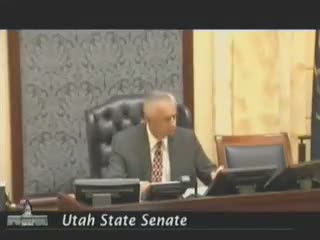
Utah Senate opens day 5; clerk transmits several House-passed bills and chamber recesses to caucuses
Summary
On day 5 of the February 2009 legislative session the Utah Senate convened, the clerk read a set of House-passed bills transmitted for the Senate’s consideration, and Senator Kilpack moved — and the Senate approved — a 15-minute recess for caucuses.
The Utah State Senate convened for day 5 of the February 2009 general session. After a guest prayer and the pledge of allegiance, Senate Clerk Clark read a list of measures the House had passed and transmitted to the Senate for consideration.
During the communications reading, Clerk Clark said the House had "passed as amended House Bill 17," then listed additional measures including "House Bill 34," "House Bill 52," "House Bill 86," and two measures transcribed as "House Bill 2 16" and "House Bill 2 38." Clark identified the House sponsors named in the reading but did not provide details of the measures’ contents.
Unidentified Speaker noted that the bills "having been read for the first time, will be referred to the rules committee," and added that they would "undoubtedly die" there. The remark was delivered as a floor comment about the likely procedural outcome of first readings and referrals.
Later in the session, the presiding voice recognized Senator Kilpack, who moved that the Senate recess to caucuses for about 15 minutes. Members responded orally "Aye," the presiding speaker declared the motion carried, and the Senate recessed. No roll-call vote on the recess motion was recorded in the transcript; the session’s roll call earlier had recorded 25 present and 4 absent.
What happened next: the clerk’s transmission places the listed House measures into the Senate’s referral process (first reading), after which the Senate Rules Committee will determine scheduling and next steps. The transcript records only the transmission and the referral announcement; no committee actions, hearings, or substantive debate on the bills appear in the provided segments.