Get Full Government Meeting Transcripts, Videos, & Alerts Forever!
Get email alerts on the Legislative Votes topic
No spam. Unsubscribe anytime.
Senate advances broad package of bills including tax credits, road bonds and registry changes; votes at a glance
Summary
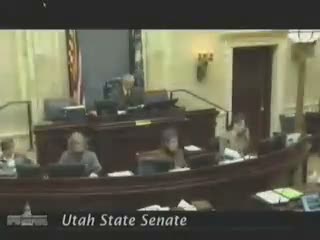
On March 9 the Utah Senate handled communications from the House and approved a wide slate of bills — from economic development tax credits and a Salt Lake County road bond to changes to the offender registry — recording final passage on multiple bills and sending them to the House for signature or enrollment.
The Utah Senate spent its March 9 floor session moving a large slate of legislation through concurrence, second/third reading and final passage, recording votes on bills that touch transportation funding, economic development incentives, licensing, offender registry rules and more.
Major votes and outcomes
- First substitute Senate Bill 45 (Utah State Premises Act amendment): Senate concurred with House amendments and the bill passed final passage (first substitute SB45 recorded 25 yea, 0 nay).
- Third substitute Senate Bill 107 (lien amendment): Senate concurred with House amendments; the bill passed final passage (26 yea, 0 nay, 3 absent).
- Second substitute Senate Bill 152 (Utah State Railroad Museum Authority): House amendments were described as housekeeping; Senate concurred and passed (26 yea, 0 nay, 3 absent).
- House Joint Resolution 26 (approving water rights addendum form): Passed on final passage (26 yea, 0 nay, 3 absent).
- House Bill 24 (Economic Development Incentives Act Amendments): Presented as authorization for tax credits tied to job creation and local purchases; the bill passed on final passage and will return to the House for the speaker’s signature (vote recorded during floor action).
- House Bill 125 (Kidnapping and Offender Registry Amendments): Amendment moved by Sen. Greiner split certain kidnapping categories so some offenses would not remain on the sex‑offender registry; the amended bill passed final passage (24 yea, 0 nay, 5 absent).
- First substitute Senate Bill 215 (Highway project funding): Senate adopted the first substitute and Sen. Niederhauser detailed project‑level allocations (examples include $2,000,000 for 2300 East in Salt Lake County, $3,500,000 for North Temple in Salt Lake City, and $68,500,000 for various state roads); the substitute passed on final passage (vote recorded as passed with 25 yea votes).
- Second substitute House Bill 170 (Foster care revisions): The Senate passed the bill after sponsor presentation and witness introduction (see separate coverage). The clerk recorded final passage with 24 yea votes, 0 nay, 5 absent.
- Multiple other bills were considered and passed under suspension of the rules, including temporary licensing for audiologists and speech‑language pathologists (first substitute HB396, passed), House Bill 209 (offender registration amendment, passed), House Bill 74 (adoption and child custody amendments, passed), House Bill 130 (Cancer Research license plates, passed) and several committee and technical bills; votes and recorded tallies appear in the floor record.
Floor process and context
The clerk and presiding officer managed roll‑call votes and recorded tallies; several bills were considered “under suspension of the rules” to be read for second and third times and advanced that same day. Senators frequently described amendments as technical or housekeeping; some bills prompted brief floor explanations of intent (for example, HB24’s economic incentives and SB215’s list of prioritized road projects). Where House amendments were concurred to, the Senate returned the bills to the House or sent them for enrolling as indicated by the President.
What passed and next steps
Bills that passed final action on the floor will either be returned to the House for the speaker’s signature (for House bills) or sent to enrolling for the Governor’s consideration as appropriate. The floor record shows specific roll‑call tallies for many items; where a precise numeric tally was recorded in the transcript it is listed above. Several bills were noted as having been signed by the President in open session and transmitted accordingly.
Because the session advanced a broad package of bills with limited floor debate on many items, reporters tracking specific measures should consult the enrolled legislation for final text and any amendments that passed the House or received later action.