Get Full Government Meeting Transcripts, Videos, & Alerts Forever!
Get email alerts on the Session Roundup topic
No spam. Unsubscribe anytime.
Utah Senate clears broad slate of bills on Day 45; key amendments approved
Summary
On March 11, 2010, the Utah State Senate moved through a large concurrence calendar and passed dozens of bills — from bond authorizations and health- and education-related measures to criminal penalties and licensing reforms — approving a number of floor amendments before adjourning for a midday recess.
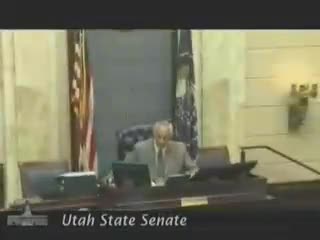
The Utah State Senate convened on Day 45, March 11, 2010, and passed a broad array of bills after floor debate, amendments and roll-call votes. The chamber handled concurrence on House amendments for multiple Senate bills, approved final passage of several measures and adopted amendments on a handful of bills before recessing in the early afternoon.
Why it matters: The session advanced policy across budgetary, health, education, transportation and criminal-justice areas shortly before a scheduled photo and planned recess. Several bills carry fiscal effects or change administrative procedures for state agencies.
What the Senate did: Among the bills the Senate acted on were: second substitute Senate Bill 52 (State Board of Regents amendments), Senate Bill 191 (governmental accounting amendments), Senate Bill 218 (Engine Coolant Bittering Agent Act), Senate Bill 222 (fee exemption for local districts), Senate Bill 273 (hospital assessments), Senate Bill 280 (2010 general-obligation bond authorization — House amendment on $2 million planning money was rejected by the Senate), Senate Bill 62 (motor vehicle insurance/arbitration changes), Senate Bill 272 (UTA transit-oriented development amendments), and several House bills returned to the Senate including House Bill 17 (employment/hiring accommodations for people with disabilities) and House Bill 464 (Family Health Services/tobacco settlement). Multiple other bills were read, circled for further action or passed under suspension of the rules.
Votes at a glance (as recorded on the floor): - SB 52 (Second Substitute) — concurrence with House amendments approved; final passage recorded in the transcript as concurrence carried and final vote announced (floor reported concurrence passed). (Timeline: Senate concurrence and final passage announced) - SB 191 — concurrence and final passage (26 yea, 0 nay, 3 absent). (Timeline: final passage recorded) - SB 218 — concurrence and final passage (26 yea, 0 nay, 3 absent). (Timeline: final passage recorded) - SB 222 — concurrence and final passage (27 yea, 0 nay, 2 absent). (Timeline: final passage recorded) - SB 273 — concurrence and final passage (25 yea, 3 nay, 1 absent). (Timeline: final passage recorded) - SB 62 — concurrence and final passage (25 yea, 1 nay, 3 absent). (Timeline: final passage recorded) - SB 272 — second substitute passed on final passage (19 yea, 7 nay, 3 absent). (Timeline: debate and vote recorded) - HB 17 — considered under suspension and passed after debate (transcript records final passage with 16 yea, 6 nay, 7 absent on the roll as read on the floor). (Timeline: extended debate recorded) - HB 464 — passed (22 yea, 0 nay, 7 absent); the transcript lists a tobacco-settlement deposit (transcript shows $5,500,000 or $5,050,000; see clarifying details). (Timeline: passage recorded) - HB 197 (fifth substitute) — passed after amendment concerning driver's-license suspension as a sanction for custodial interference (22 yea, 0 nay, 7 absent). (Timeline: amendment and passage recorded) - HB 133 (first substitute) — limits release of court documents and child interviews; passed (transcript shows first substitute having received 23 yea votes, 0 nay, 6 absent). (Timeline: passage recorded)
Not all items had lengthy debate; many were handled by unanimous voice or by suspension of the rules. Where the House amended bills in ways the Senate found unacceptable, the Senate either refused to concur (sending the matter back to the House) or requested the House recede.
Key floor process notes: Several measures were read under suspension of the rules; senators frequently placed bills 'in circle' (set aside) or 'uncircle' them for action later the same day. The President and the majority leadership managed a fast-moving calendar aimed at completing must-pass budgetary and technical items before midday deadlines. The Senate also appointed conference committees where the House refused to recede.
What’s next: Bills passed by the Senate will be returned to the House for its signature or for conference where required. For items sent back to the House (refusal to concur) the chambers will negotiate further through the appointed conference committees.
Ending: The Senate recessed for a scheduled photo and planned to reconvene after 2:10 p.m.