Get Full Government Meeting Transcripts, Videos, & Alerts Forever!
Get email alerts on the State Legislation topic
No spam. Unsubscribe anytime.
Utah Senate clears wide range of House bills; close votes on subpoena authority and a failed change to legal-notice rules
Summary
On March 8, 2010 the Utah Senate considered dozens of House measures and resolutions, concurring on recodification of the Alcoholic Beverage Control Act and passing bills on drug-law definitions, Medicaid reporting and administrative subpoena authority for certain internet crimes; a proposal to allow free community papers to carry legal notices failed.
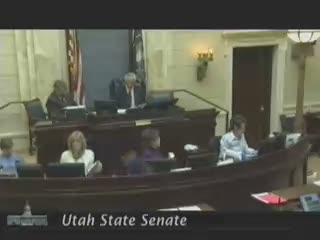
The Utah Senate met March 8, 2010 in Salt Lake City, opening with a prayer from visiting Thai clergy and the Pledge of Allegiance led by Senator Ross Romero. The Senate took up a long second-reading calendar of House bills, concurring with House amendments and voting under suspension of the rules on multiple measures.
Senators voted to concur with House amendments to Senate Bill 167, a recodification of the Alcoholic Beverage Control Act. Senator Valentine moved concurrence, and the motion passed by voice and roll call; the clerk recorded 25 yes, 0 no, 4 absent. The measure will be returned to the House for the speaker’s signature.
On consumer and credit policy, the chamber approved House Concurrent Resolution 7 urging Congress to allow consumers free annual access to their FICO credit score. Senator Jones presented the resolution and the Senate suspended the rules for final passage.
A package of criminal and public-safety bills moved quickly. First substitute House Bill 13, intended to harmonize definitions across pharmacy and controlled‑substances statutes, was presented by Senator Knudson as a measure to reduce prosecutorial and defense confusion; it passed under suspension of rules with a unanimous recorded vote. In health and human services, second substitute House Bill 397 (Medicaid amendments) — including reporting requirements and internal-audit directions for the Department of Health — was amended on the floor to accelerate a reporting date and passed by roll call.
Environmental and fee reforms also passed. Second substitute House Bill 331, which revises fee structures for hazardous and radioactive waste to cover regulatory costs and create an operating cushion, drew questions about a $4,000,000 reserve figure; sponsors said the amount was chosen as a practical cushion. The bill passed on final vote.
Not all proposals succeeded. House Bill 429, which would have allowed free community newspapers (the "Valley Journals" was invoked repeatedly in debate) to carry legal and budget notices in certain counties, prompted concerns about transparency and a move back from online centralization of public notices. Opponents, including Senator Eckhardt and others, called the bill a step backward; the final roll call showed the bill failed (reported as 4 yes, 22 no, 3 absent).
The chamber spent substantial time debating House Bill 150, a measure to grant administrative‑subpoena authority to the attorney general’s office and certain prosecutors to obtain limited "contact" information (for example, account-holder name, length of service, and identifying financial account names) in investigations of internet crimes such as child exploitation, kidnapping and stalking. Sponsor Senator Dayton said the bill “does not violate the Fourth Amendment” and stressed that content still requires a warrant. Opponents raised questions about privacy, notice to affected account holders and the breadth of permitted identifiers (credit-card and bank account names were cited in the statute as identity elements). The measure was briefly circled for clarification and then returned to the floor; after extended debate the Senate passed the first substitute by a narrow margin (final recorded tallies reported as 19 yes, 10 no).
Throughout the morning and early afternoon the Senate also confirmed a slate of gubernatorial appointments by unanimous consent, recognized award-winning legislative staff and guests in the gallery, and handled a range of other bills on business, administrative and water-rights topics. The clerk and president announced roll calls and procedural actions, and the body recessed for lunch after completing the scheduled business.
What’s next: several bills passed on suspension of the rules will be returned to the House for signatures; sponsors who requested circling of items (for example HB24 and HB150 earlier in the day) used that procedure to buy time for technical amendments and clarifying questions. The Senate reconvened after lunch for advice-and-consent, additional third‑reading items, and pending second-reading calendar business.
Direct quotes from the floor included sponsors’ core defenses: “I move that we concur,” (Senator Valentine, on SB 167); “This bill does not violate the Fourth Amendment,” (Senator Dayton, on HB 150); and proponents of the legal-notice change saying the measure would “get these notices out to a lot more people” (Senator Niederhauser on HB 429).
The Senate’s actions on March 8 produced a mix of unanimous, bipartisan outcomes and narrow, contested votes on measures that intersect with civil liberties, transparency and administrative procedure. The House will receive measures returned with Senate concurrence and the governor’s communications will be filed with the clerk.