Get Full Government Meeting Transcripts, Videos, & Alerts Forever!
Get email alerts on the Education Budget topic
No spam. Unsubscribe anytime.
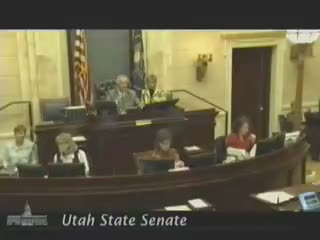
Senate adopts conference report on public education budget; charterscholarship compromises kept testing funds
Summary
The Utah Senate adopted the conference committee report on Second Substitute Senate Bill 2, a package of minimum school program and public education budget amendments that preserves $1.5 million for testing, sets a charter-student authorization cap for 2012–13 at 6,000, and delays changes to local replacement funding after compromise with the governor.
The Utah Senate on March 11 adopted the conference committee report for Second Substitute Senate Bill 2, a package of changes to the minimum school program and related public education budget provisions negotiated between House and Senate conferees and the governor’s office. Senator Howard Stevenson, sponsor of the Senate bill, presented the conference committee report and outlined the key compromises reached.
Stevenson said the final package removed the Senate’s proposed phase-out of local replacement funding and an alternative formula for charter funding, instead agreeing to a final authorization of 6,000 charter students for the 2012–13 school year. “We came to an impasse,” Stevenson said of the differences between the chambers, and described the governor’s commission on excellence in education as a vehicle for addressing the matter next year. He moved that the Senate accept the conference committee report, and the motion carried.
The conference compromise retained $1.5 million per year to expand computer-adaptive testing and the ACT exit exam program, while $750,000 was allocated for libraries and the PJET teacher-recruitment program (approximately $400,000 and $350,000, respectively). The report also preserved $750,000 in testing funding that had been part of prior deliberations.
Senator Lyle Hilliard, a key appropriations negotiator, said the governor helped broker an agreement and urged the body to adopt the report. “He was very compelling in his argument that this is not the year to phase out the local replacement funding,” Hilliard said, summarizing the governor’s position in conference discussions. Following roll call, the second substitute bill passed the Senate 26–1 and will return to the House for signature.
Why it matters: The conference report halts immediate structural changes to how local property-tax revenue is replaced when students move from district schools to charter schools, while preserving targeted testing and teacher-recruitment spending. Lawmakers said the compromise is intended as a pause for the governor’s interim commission to study longer-term solutions.
Next steps: The bill will be returned to the House for the signature of the speaker and for enrollment; conferees said the governor’s commission will review local replacement funding and related equalization issues ahead of the next session.