Get Full Government Meeting Transcripts, Videos, & Alerts Forever!
Get email alerts on the Public Lands topic
No spam. Unsubscribe anytime.
Utah Senate approves eminent-domain authority and companion funding to pursue federal land claims
Summary
The Senate passed House Bill 143 to let Utah use eminent domain to acquire federally held land that blocks access to state school trust lands, and approved a related appropriation plan to fund litigation. Sponsors argued it would unlock revenues for schools; critics warned of near-certain lawsuits and fiscal risk.
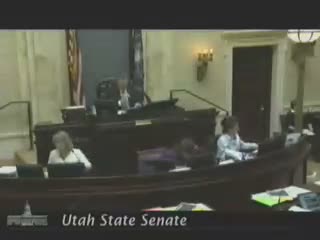
The Utah Senate on March 9 passed House Bill 143, a measure authorizing the state to acquire property from the federal government by eminent domain where federal holdings block access to school trust lands. Senate supporters framed the bill as a way to recover revenues the state claims were promised in its Enabling Act; opponents warned the state would almost certainly face costly litigation.
Sponsor Sen. Cinder Urquhart told colleagues that federal policies have left Utah’s school trust lands effectively inaccessible and that ‘‘we will be in court on this’’ to press the state’s legal claims. Urquhart pointed to the Utah Enabling Act and argued the 1976 Federal Land Policy and Management Act effectively nullified the promised land disposals that would have benefited schools.
Sen. Jones and others pressed the sponsor on the bill’s constitutional note and the fiscal consequences of likely litigation, with Jones saying the state should study the note carefully before committing scarce resources. Sen. O’Meara and other senators urged caution, noting the attorney general’s office will be expected to defend any test cases and that litigation costs could be substantial.
Lawmakers paired the eminent-domain authority with companion legislation to fund legal action. Senate substitute House Bill 3 24 (the public-lands litigation bill) created a constitutional defense restricted account and directed the attorney general to pursue title or eminent-domain actions under the state’s enabling statutes. Senators described an initial appropriation plan from the land-exchange distribution account: the sponsor initially described a $1 million-a-year authorization over three years but critics and supporters debated an amended total amount. That amendment was adopted and members referenced a $3,000,000 obligation allocated to the constitutional defense account.
Backers said the appropriation is not drawn from the school trust operating funds (SITLA) and argued that the investment could unlock ‘‘billions’’ of dollars in future severance tax and lease revenue if the state prevails or negotiates access to mineral leases now locked by federal ownership.
The Senate approved HB 143 as amended and the companion funding measure during the same floor day. Supporters cast the move as a long-term investment in education funding; opponents described it as a risky use of public dollars that would likely produce protracted litigation and uncertain results. Both measures will be forwarded to the House.
What’s next: The enactment of either bill would almost certainly prompt litigation testing who holds sovereign claims over the contested lands. The attorney general’s office will be the likely lead for any actions authorized under the funding bill; the timetable for any court test case depends on subsequent administrative and legal steps.