Get Full Government Meeting Transcripts, Videos, & Alerts Forever!
Get email alerts on the Education Governance topic
No spam. Unsubscribe anytime.
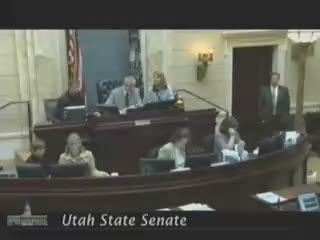
Senate approves requirement for two rural appointees to Board of Regents after debate
Summary
Senators passed first-substitute Senate Bill 52 to require two governor-appointed regents from rural-designated areas, amid debate that raised concerns about whether the governor could game appointments and whether the change meaningfully shifts ultimate confirmation control to the Senate.
The Utah Senate on March 2 passed first-substitute Senate Bill 52, a statutory amendment that defines 'rural' by metropolitan statistical area boundaries and directs the governor to appoint two Board of Regents members from rural-designated areas.
Sponsor Senator Stoll described the bill’s genesis and historical context, noting that when the Board of Regents was created in 1969 there was an express concern that rural Utah not be shut out of higher-education governance. Stoll said the proposed language and an accompanying amendment add consideration for geographic representation and "diversity of exposure" to the various institutions in the Utah system of higher education; he distributed charts and maps to illustrate why two rural appointees are justified given population distribution.
Senator Romero and others voiced support, saying mandated rural representation would add important perspectives and correct an urban concentration. Senator Hilliard offered a direct dissent, arguing the change could be "gamed" — for example by appointing individuals who technically meet a rural residency test but whose life and interests are rooted elsewhere — and stressed that the Senate’s confirmation process is the ultimate backstop. Hilliard stated on the floor, "I vote no on the bill," citing concerns that mandatory criteria do not fully control the governor’s choices.
Senator Stoll and other proponents responded that the governor had indicated support and that including an explicit rural-definition in statute helps ensure future administrations appoint geographically representative members; they noted that the Senate still must confirm appointments.
On final passage the transcript records a roll-call tally of 21 yeas, 2 nays and 6 absent; the bill will be forwarded to the House for its action.
What is in the bill: SB52 adds a definition of rural based on federal MSA boundaries and requires two regents to be appointed from the areas so defined; sponsor materials included maps and a short demographic justification (roughly 11% of the state population under the chosen definition is rural, per the sponsor’s chart).
Next steps: The bill was forwarded to the House. The Senate confirmation process remains the formal limit on appointments; implementation questions about how residency will be verified or interpreted may arise when specific nominees are forwarded for confirmation.