Get Full Government Meeting Transcripts, Videos, & Alerts Forever!
Get email alerts on the Session Roundup topic
No spam. Unsubscribe anytime.
Senate advances and decides a slate of bills on disability hiring, indigent counsel, taxes and Real ID opt-out
Summary
During a lengthy floor session the Utah Senate debated and voted on multiple measures: House Bill 17 (alternate hiring route for people with disabilities) passed 16–11; House Bill 115 (limits on indigent counsel scope) passed unanimously 26–0; a tobacco-tax increase (first substitute Senate Bill 40) passed 20–9; House Bill 125 (removal of simple kidnapping from offender registry) failed 13–14. Several other bills were passed or circled for later review.
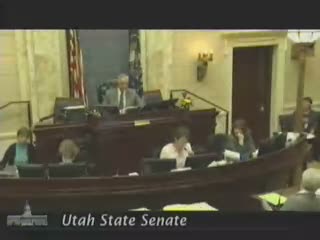
The Utah State Senate spent floor time on a range of bills addressing employment for people with disabilities, juvenile indigent counsel, tobacco taxation, Real ID opt-out, and other matters. Several measures received final roll-call action.
House Bill 17 (amendments to programs for people with disabilities) was debated at length. Sponsor Senator Lillianquist described the measure as creating an option for departments to hire a person with a disability through an ‘‘on the job examination’’ and a six-month appointment intended to allow agencies to evaluate candidates who cannot complete standard computer-based testing. "It says a position can be filled through a department approved on the job examination intended to appoint a qualified person with a disability," Senator Lillianquist said. Supporters described the change as an alternate path for qualified applicants; critics asked whether the bill would create an unfair hiring preference or conflict with federal standards. Senator Greiner pressed whether the federal government encouraged bypassing regular hiring procedures and asked whether that could be discriminatory; the sponsor responded the process is intended to accommodate applicants (for example, those who are blind) who cannot complete computer-based testing and that the provision is optional for departments. After debate the Senate recorded final passage for House Bill 17 with 16 yea votes and 11 nay votes, 2 absent.
House Bill 115 (counsel for indigent in juvenile court) was presented by Senator Van Tassel. The bill narrows the county’s responsibility where counsel is appointed to the proceedings for which counsel is appointed, excluding certain family-court matters that would not be covered. The Senate passed the measure on a roll-call vote of 26 yea, 0 nay, 3 absent; the bill was amended and will return to the House for further work.
Tax and budget-related measures moved through the chamber. First substitute Senate Bill 40, a cigarette and tobacco tax amendment, was substituted and amended on the floor to cap cigar tax at $10 per cigar and to place new revenue in the cigarette tax restricted account. Senator Christiansen said the change would raise the cigarette tax by about $1.05 per pack to a total of about $1.70 per pack and increase other tobacco-product taxes proportionally. The bill passed on final passage, 20 yea, 9 nay.
Other notable actions on the floor included:
• House Bill 125 — a proposal to remove simple kidnapping from the sex/offender registry — failed on final vote (13 yea, 14 nay, 2 absent). Sponsors argued it would help people who face barriers to employment because of registry listing; opponents cautioned about opening a new ‘‘kidnapping portal’’ without knowing registry rules. • House Bill 234 — a substitute to opt Utah out of the federal Real ID Act (state opt-out posture) — passed the Senate (23 yea, 5 nay, 1 absent). Sponsor Senator Dayton said the measure affirms Utah will not be part of a national ID program in the bill’s terms and preserves state-issued driver licenses for identification purposes. • House Bill 276 — amendments related to offender registry coverage for out-of-state or military convictions — passed (27 yea, 0 nay, 2 absent). • House Bill 73 and House Bill 181 (continuing education and condominium association common-expense rules) passed later in the session, as did several other substitutes and amendments; many items were returned to the House for signature after Senate amendment.
Votes at a glance (selected final floor tallies reported on the transcript):
• Senate Bill 209 (Rotary specialty plate) — final passage: 26 yea, 0 nay, 3 absent (sent to House). • House Bill 17 (people with disabilities — on-the-job exam hiring option) — final passage: 16 yea, 11 nay, 2 absent. • House Bill 115 (indigent counsel in juvenile court) — final passage: 26 yea, 0 nay, 3 absent (amended; returned to House). • House Bill 125 (remove simple kidnapping from registry) — failed: 13 yea, 14 nay, 2 absent. • First substitute Senate Bill 40 (tobacco tax changes) — final passage: 20 yea, 9 nay, 0 absent. • House Bill 18 (unemployment insurance base-period and $20M support) — final passage: 28 yea, 6 nay, 3 absent.
What senators asked for and what remains: floor questions repeatedly emphasized scope and implementation limits (for example, how departments would implement on‑the‑job examinations, federal law interactions, and what the restricted cigarette-tax account would fund). Several bills were circled or substituted to allow stakeholders or the public time to review amended language (for example, Senate Bill 227 on interlocal energy amendments was substituted to reflect a settlement between Rocky Mountain Power, Heber Valley Power and some developers and then circled so the substitute text could be publicly reviewed). Many bills were returned to the House for further work after Senate amendment.
The Senate adjourned until the announced time on Friday and left multiple items returned to the House or circled for later consideration.