Get Full Government Meeting Transcripts, Videos, & Alerts Forever!
Get email alerts on the Legislative Ethics topic
No spam. Unsubscribe anytime.
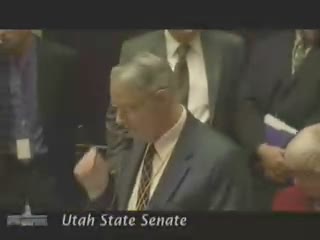
Senate approves constitutional amendment to establish Legislative Ethics Commission after heated debate
Summary
The Utah Senate voted 25–4 to pass HJR 15, a proposed constitutional amendment to establish a five‑member Legislative Ethics Commission to conduct independent reviews of complaints against legislators; an amendment to expand initiative authority failed on the floor.
The Utah Senate approved House Joint Resolution 15 on final passage, 25–4, advancing a proposed constitutional amendment to create a five‑member Legislative Ethics Commission to perform independent reviews of complaints against legislators.
Sponsor remarks framed HJR 15 as a supplement to the legislature’s existing authority to discipline its members, saying the proposal would "define how we will actually do an investigation" of complaints while preserving the legislature’s ultimate disciplinary power. Senator Valentine, speaking in support, described Article 6, Section 10 of the Utah Constitution as an "important grant of authority to the legislature" and called the resolution a "supplement" that explains how that authority will be exercised.
Debate centered on the balance between legislative independence and citizen oversight. Senator Romero proposed an amendment to add the words "or the citizens may by initiative provide for" (to preserve citizens’ ability to use initiatives to establish an advisory commission); the amendment prompted extended argument about separation of powers and was defeated on the floor. Opponents argued the change would allow initiatives to erode the legislature’s plenary constitutional authority; supporters said citizens should be able to participate in shaping an advisory ethics body.
Senators who opposed the amendment warned of constitutional and separation‑of‑powers risks; supporters said the resolution mainly enshrines an advisory process and improves transparency. After the amendment failed, the sponsor summarized the measure on the floor: "This resolution will enshrine in the constitution forever an ethics commission to augment the ethics committees we have in each body," and moved to suspend the rules for final passage.
The motion to suspend the rules carried, and the roll‑call final passage was recorded as 25 yea votes and 4 nay votes. The resolution is to be returned to the House for the Speaker’s signature as part of the constitutional amendment process; if enacted in both chambers and signed, the proposal would go to the voters as required for a constitutional change.
What’s next: HJR 15 will be returned to the House for its signatures and then follow the standard constitutional amendment process (legislative approval and a public vote).