Get Full Government Meeting Transcripts, Videos, & Alerts Forever!
Get email alerts on the Employment Verification topic
No spam. Unsubscribe anytime.
Senate approves first substitute SB 251 to promote voluntary E-Verify use, citing identity-theft concerns
Summary
The Utah Senate passed first substitute Senate Bill 251, encouraging employers to use the federal E-Verify system and offering safe-harbor protections for businesses that do; sponsors framed the bill as a tool to reduce identity theft, while critics warned of accuracy problems and burdens for small employers.
Senate Bill 251, the employment-verification measure that encourages use of the federal E-Verify system, cleared the Utah Senate on final passage after extended floor debate and public testimony.
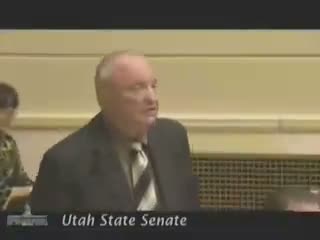
Sponsor Senator Phil Butters moved the first substitute and framed the bill as a response to identity theft, saying stateAttorney General estimates of affected children — which he cited during remarks — motivated the effort. Victims who spoke in Committee of the Whole described concrete harms: Lynette Weed said her nine-year-old daughter Grace’s Social Security number had been used by multiple people; Christopher Campbell recounted being arrested because someone else used his Social Security number.
The bill’s first substitute removed the original bill’s heavier penalties and added exemptions and incentives, the sponsor said. Key provisions reported on the floor include an exemption for very small employers, a safe-harbor that protects employers from prosecution when they use E-Verify in good faith, and language making participation voluntary rather than mandatory.
Supporters argued the measure protects children and businesses. Senator Butters said the system’s accuracy is improving and that employers who use E-Verify receive legal protections if a later enforcement action shows they acted in good faith.
Opponents and several senators questioned E-Verify’s accuracy and administrative burden. Senators raised evidence that federal and nonfederal studies produce widely different accuracy estimates — a national figure cited on the floor was around 50–54 percent accuracy while the Utah Attorney General’s figure cited in debate was 93 percent — and warned that false-positive “no match” results can require substantial employer time to resolve. Several speakers cautioned about disparate impacts: women who change last names and people with common names may face disproportionate no-match rates, and small businesses lack HR capacity to process disputes.
Amendment debate focused on the employer-size threshold that triggers recommended participation; a proposal to raise that threshold (Amendment 1) failed on the floor.
Under a motion to suspend the rules for immediate consideration, the Senate voted for final passage of first substitute SB 251; the tally recorded on the floor was 24 yea, 4 nay, 1 absent. The bill was ordered forwarded to the House for further action.
Actions and next steps: the Senate’s action returns the first substitute to the House for concurrence or further processing. If enacted, the bill would make state-level incentives and limited safe-harbor protections available to employers that opt into E-Verify; it does not create criminal penalties for employers that decline to use the system.