Get Full Government Meeting Transcripts, Videos, & Alerts Forever!
Get email alerts on the Floor Session Roundup topic
No spam. Unsubscribe anytime.
Utah Senate advances multiple bills on voter ID, utilities, health and transparency; votes at a glance
Summary
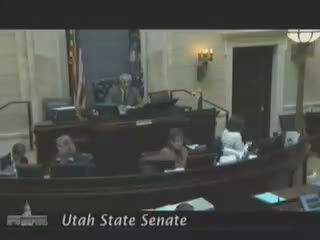
In a Feb. 24 floor session the Utah Senate advanced a range of bills and resolutions including a voter-identification amendment, utility coordination legislation, health administrative reforms and a transparency proposal for higher-education donations. Several measures were placed on the third-reading calendar or passed to the House.
The Utah Senate handled a heavy floor calendar Feb. 24, advancing bills on elections, infrastructure, health administration and higher-education transparency and passing several measures on voice and roll-call votes.
Senator Knudson presented House Bill 254, a voter-identification amendment that clarifies which forms of ID qualify for voting purposes, and moved the bill for passage. The Senate recorded 22 yea votes, 0 nay, 7 absent and the President signed the bill in open session for return to the House.
Senate Bill 137, described by its sponsor as a ‘‘common-sense coordination’’ measure to reduce repeated utility relocations during road projects, passed the Senate by roll call and will be forwarded to the House.
Lawmakers also advanced health- and insurance-related bills, including measures to standardize coordination-of-benefits and electronic health-insurance exchanges recommended by the Health System Reform Task Force, and amended motor-vehicle insurance claims timelines to require initial insurer action and a final-offer deadline (the sponsor described a 60-day initial and 120-day final timeline in amendment debate).
Transparency in higher-education donations was another floor item: the first-substitute version of House Bill 114 would require institutions to file donation reports with the State Board of Regents and lower the reporting threshold for foreign donations from $250,000 to $50,000 for state-level visibility; the bill advanced to third reading.
Votes at a glance
- HB 254 (Voter Identification Amendment): Passed in the Senate 22–0; signed in open session for return to the House. - SB 137 (Coordination of Removing/Relocating Utilities): Passed in the Senate 23–0; forwarded to the House. - HB 258 (Voting Precinct Boundary): Placed at bottom of third-reading calendar after roll-call (22 yea as recorded). - HJR 12 (Climate change message resolution): Advanced and placed on third-reading calendar after debate. - HJR 9 (Support for Veterans Nursing Home): Uncircled and placed on third-reading calendar (vote reported in-floor). - SB 62 (Motor vehicle insurance claims settlement practices) — as amended: Amendment adopted; passed to third reading. - HB 114 (Disclosure of donations to higher education): Passed to third reading (22–2 recorded).
What’s next
Most bills discussed were placed at the bottom of the third-reading calendar or advanced to third reading; several measures will return for final votes in a later floor session. The Senate adjourned until the next legislative day.