Get Full Government Meeting Transcripts, Videos, & Alerts Forever!
Get email alerts on the Federal Policy topic
No spam. Unsubscribe anytime.
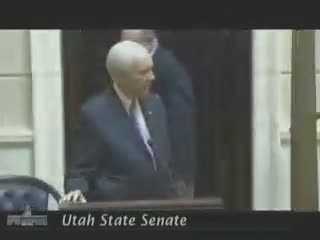
U.S. Sen. Hatch visits Utah Senate for Q&A on CHIP and federal health policy
Summary
U.S. Senator Hatch met with the Utah Senate in a committee of the whole, answering senators’ questions about CHIP, health-care reform, entitlement programs and federal-state roles, and described CHIP as a bipartisan success while criticizing parts of federal health reform process.
The Senate resolved into a committee of the whole to hear from U.S. Senator Hatch, who answered senators’ questions about federal health policy, entitlement programs and Washington politics.
Hatch said CHIP (the Children’s Health Insurance Program) addressed a specific coverage gap for working-poor families and called it a bipartisan success. “I had two families come from Provo…neither family made more than $20,000 a year,” Hatch said, describing CHIP’s origins and why he favored it. He said states often run programs better and expressed frustration with how recent federal health reform bills were prepared and negotiated.
On entitlement and fiscal concerns, Hatch told senators the nation needs to get entitlement programs under control while recognizing the broad benefits those programs have provided. He described frustrations with how congressional leadership handled elements of the recent health-care debate and criticized targeted allocations in the final federal bills that he said were politically motivated.
Senators thanked Hatch and asked follow-up questions on federal-state roles, and the committee of the whole dissolved after Hatch addressed the chamber. The Senate then returned to regular session business.
Context: The visit gave state senators direct access to a federal lawmaker to question him about programs—especially CHIP and the federal health-care debates—underscoring continuing tensions between state prerogatives and national policy design.