Get Full Government Meeting Transcripts, Videos, & Alerts Forever!
Get email alerts on the Legislative Process topic
No spam. Unsubscribe anytime.
Votes at a glance: Senate passes multiple bills on consent and third-reading calendars
Summary
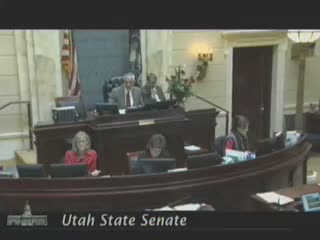
On Day 19 the Utah Senate passed a batch of bills on consent and third readings — including House Bill 95, Senate Bill 34, SB18, SB21, SJR2, SB58, SB26 and others — with roll-call tallies recorded on the chamber floor; most measures were forwarded to the House.
The Utah Senate completed a full consent and third-reading calendar, approving a range of bills that included election law changes, tax adjustments, criminal-justice provisions and technical statutory fixes.
Highlights and outcomes recorded on the floor:
- First Substitute House Bill 95 (voting-equipment certification changes) passed unanimously in the Senate and was returned to the House; clerk recorded 28 yea, 0 nay, 1 absent.
- Senate Bill 34 (partnership tax return filing deadline) passed the Senate (27-0, 2 absent) and will be forwarded to the House.
- Senate Bill 18 (election modifications) passed concurrence with House amendments (26-0, 3 absent) and was returned to the House.
- Senate Bill 21 (social worker licensing amendments) passed on roll call (26-0, 3 absent).
- Senate Joint Resolution 2 (combating and reducing gang activity) passed the Senate 25-0 with four absent and was referred to the House.
- Senate Bill 58 (transportation expenses for defendants / statewide warrant amendments) passed the Senate 26-0 with 3 absent and will be forwarded to the House.
- Senate Bill 26 (Utah E-Commerce Integrity Act) was amended on the floor to remove criminal provisions and passed 27-0 with 2 absent.
- Additional bills on the consent or third-reading calendars (e.g., Senate Bill 76, Senate Bill 102 as amended, House Bill 42) passed with recorded yea tallies and will proceed to the House as noted in the clerk—s entries.
Why it matters: The consent calendar and third-reading actions move a wide set of measures efficiently toward enactment or further consideration. Most passed bills were described on the floor as technical fixes, amendments, or committee-negotiated compromises rather than subjects of extended floor debate.
Procedural note: The clerk—s ledger recorded vote counts for each item and noted which bills were circled, uncircled, substituted or placed at specific points on second- or third-reading calendars before final passage.