Get Full Government Meeting Transcripts, Videos, & Alerts Forever!
Get email alerts on the Pension Reform topic
No spam. Unsubscribe anytime.
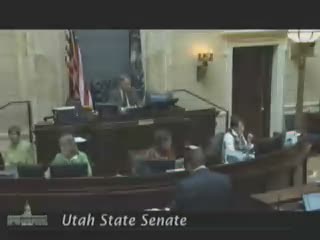
Utah Senate advances broad pension reform package after hours of debate
Summary
The Utah Senate moved first substitute SB43 and SB63 forward and placed SB94 on the third‑reading calendar after an extended debate over a roughly $6.5 billion unfunded pension liability. Lawmakers disputed speed, impact on public employees and actuarial assumptions; SB63 recorded 20–8 on the roll call.
Salt Lake City — After several hours of debate, the Utah Senate advanced a three‑bill pension package aimed at reducing the state’s long‑term exposure to retirement liabilities.
Senator Lilienquist, sponsor of the measures, framed the package as a response to a market collapse that produced a roughly $6.5 billion unfunded liability. "The number one goal ... is to ensure that the state can meet 100% of the pension obligations it has made to its current employees," he said during his presentation.
The package discussed in the time‑certain session includes first substitute Senate Bill 43 (limitations on post‑retirement reemployment benefits), first substitute Senate Bill 63 (a Tier‑2 hybrid contributory plan for employees hired after July 1, 2011) and Senate Bill 94 (a financing option that would suspend a 1.5 percent 401 contribution to free funds). Sponsors said the bills aim to reduce future employer risk and free funds to pay down the existing unfunded liability.
SB43 would change how rehired retirees are treated prospectively and cap certain 401 payments for rehired retirees; sponsors said current rehired employees before the effective date would be grandfathered. "If you are rehired ... into full time employment after 07/01/2010, that when you come back ... you are then an active employee, that you are not retired," the sponsor said. The transcript shows the Senate voted to read SB43 for a third time after a recorded vote; the record in the transcript indicates '20 yes' with additional tally language that is unclear in the transcript record.
SB63 would place new hires into a hybrid plan with an 8 percent employer contribution split between a smaller defined‑benefit component and a defined‑contribution component. For example, the sponsor described a hybrid in which 5 percentage points of the employer 8 percent would buy 1 percent service credit per year, a five‑year final average salary calculation, and a 2.5 percent cost‑of‑living adjustment; police and fire formulas were described as adjusted in the proposed substitute. The Senate’s roll call on advancing SB63 to the third‑reading calendar recorded 20 aye votes, 8 nay votes and 1 absent.
SB94 was presented as a financing option to reduce the near‑term employer cost increases; the Senate recorded '20 aye votes, 6 nay votes, 3 absent' and placed the bill on the third‑reading calendar.
Debate was intense and multi‑faceted. Opponents said the bills were rushed and could damage recruitment and retention for teachers, firefighters and other public servants. Senator Greiner warned the bills were moving too quickly and urged further study, saying many affected workers had not yet had time to digest the proposals. "We have to be wise and not make the same level of commitments going forward until we are certain we can meet our current ones," the sponsor responded, while also committing to further actuarial study during the intervening implementation period.
Supporters cited actuarial modeling and a November audit presented to the Retirement Independent Entities Interim Committee; sponsors and supporters argued prospective changes for future hires are the most durable tool to reduce the state’s long‑term pension risk.
What’s next: The Senate advanced the measures procedurally to third reading or the third‑reading calendar; the bills will return for final floor votes and possible further amendments. The sponsor indicated additional actuarial reviews and a substitute were expected before final action.
Vote tallies and procedural notes are reported as recorded in the transcript. Where the transcript record was unclear (notably the transcript wording during the SB43 third‑reading procedural vote), this article reports the action without inventing an exact tally beyond what the record unambiguously shows.