Get Full Government Meeting Transcripts, Videos, & Alerts Forever!
Get email alerts on the Legislation Roundup topic
No spam. Unsubscribe anytime.
Senate clears long consent and reading calendars; dozens of House and Senate bills advanced
Summary
On Day 17 of the 2010 Utah legislative session, the Senate approved multiple bills on the consent, second- and third-reading calendars (including HB59, HB199, HB50, SB104, SB114, SB122 and others), recorded a series of unanimous and roll-call votes, and placed bills for transmission to the House.
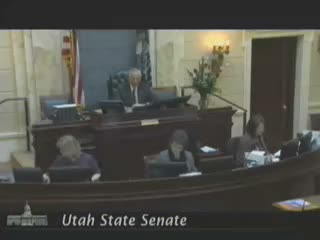
The Utah State Senate approved a broad slate of legislation during its Day 17 session on Feb. 9, moving multiple House bills and Senate measures forward and placing them on the appropriate calendars or sending them back to the House for final action.
Bills moved on the consent calendar included House Bill 59 (campaign finance revisions), which standardizes PAC reporting to a five-day filing window and was recorded as passing by a unanimous vote; House Bill 199 (municipal clerk and recorder responsibilities), clarifying duties for finance directors assisting clerks; and House Bill 50 (sales and use tax modifications), which clarifies treatment of bundled transactions and prepaid telephone-card sourcing. Each was signed by the President in open session and returned to the House.
The Senate also advanced multiple Senate bills. Sponsors reported successful actions on renewable energy changes (Senate Bill 104, amended to clarify that compressed-air storage powered by renewables counts as renewable when certificates are retired); motor-vehicle/livestock reporting updates (first substitute Senate Bill 114); and eminent domain revisions (Senate Bill 122), among others. Recorded tallies were read into the record where required.
Senators repeatedly used procedural tools — circling and uncircling bills, substituting full-text amendments and adopting committee reports — to bundle related measures for joint presentation, especially for a set of controlled-substance database bills and insurance and health-related substitutes. Committee reports were adopted and several bills were placed on second- or third-reading calendars as the Senate managed its House-Day business.
The day’s formal actions concluded with committee assignments and housekeeping announcements, and the Senate adjourned to reconvene at 10 a.m. Thursday.
Votes at a glance: House Bill 59 — passed (28 yea, 0 nay, 1 absent); House Bill 199 — passed (28–0–1); House Bill 50 — passed (29–0–0); Senate Bill 55 — passed (28–1–0); Senate Bill 104 — passed (27–0–2); Senate Bill 114 — passed (29–0–0); Senate Bill 122 — passed (29–0–0); Senate Bill 56 — passed (24–0–5); Senate Bill 57 — passed (25–0–4). (All tallies reported as read into the record by the President.)