Get Full Government Meeting Transcripts, Videos, & Alerts Forever!
Get email alerts on the Federal Spending topic
No spam. Unsubscribe anytime.
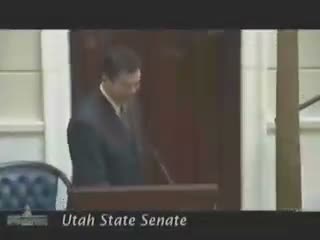
Congressman Chaffetz tells Utah Senate federal spending growth threatens economy, touts local projects
Summary
Congressman Chaffetz addressed the Utah Senate in Committee of the Whole, warning about federal deficit and workforce growth and highlighting several federal projects affecting Utah, including an upcoming environmental review for the Narrows and a proposed $1.5 billion NSA facility near Camp Williams.
Congressman Chaffetz urged members of the Utah Senate to press for tighter federal fiscal discipline and described a series of federal projects and proposals that he said matter to Utahns.
Addressing the Senate in a Committee of the Whole, Congressman Chaffetz said Washington has expanded rapidly, noting, “Our federal budget was $2,700,000,000,000 … Today it's $3,800,000,000,000, nearly a 40% increase.” He warned that growing federal employment and rising salaries are driving bureaucracy and costs that he argued harm taxpayers.
Chaffetz identified projects and policy priorities he said the delegation is pursuing for Utah: an environmental-impact statement for the Narrows project in Sanpete County expected to be released for public comment within weeks; work on a Beaver Pyle wilderness bill; and a land-disposal proposal to return certain federally held lands to private ownership so they can return to local tax rolls. He also described an NSA facility near Camp Williams that he said could be a roughly $1.5 billion construction project and employ about 1,000 people.
On natural-resources issues, Chaffetz said he supports state control over wolf management and briefed senators on efforts to improve reimbursement rates to farmers and ranchers who suffer losses from prescribed or uncontrolled fires, saying he hopes to raise reimbursement from roughly 75% to 100%.
During the question-and-answer period, senators pressed Chaffetz on health-care policy and entitlements. When Senator Jones asked what the Republican minority in Congress is pursuing on Social Security and other large entitlement programs, Chaffetz pointed to the “Roadmap for America's Future” put forward by Rep. Paul Ryan as a serious and detailed option and said he is “very supportive” of elements of that proposal as a starting point for bipartisan reform.
Senators also raised states’ rights and the Tenth Amendment. Chaffetz said he has cosponsored a House resolution supporting the Tenth Amendment and described fiscal levers, such as federal funding conditions, that complicate a straightforward shift of responsibilities to states.
The Senate dissolved the Committee of the Whole and thanked Chaffetz after the exchange. No formal action was required of the Legislature on the congressman’s remarks; senators said the visit was useful for hearing federal perspectives that affect state priorities.