Get Full Government Meeting Transcripts, Videos, & Alerts Forever!
Get email alerts on the Legislative Actions topic
No spam. Unsubscribe anytime.
Utah Senate passes several bills on Day 9, advances budget baseline and health, tax and natural-resources measures
Summary
On Day 9 the Utah Senate passed a series of measures on consent and roll-call votes, including budget baseline SB1, appointment-timing SB93, land-exchange SB24, and multiple committee items; several bills were placed on the third-reading calendar for further action.
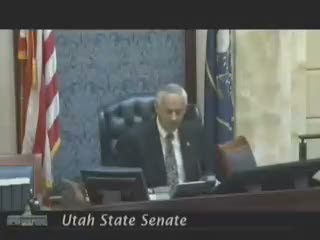
The Utah State Senate completed a full day of floor business on Feb. 1, 2010, passing a number of bills across a range of topics and moving others forward on the calendar.
Key outcomes at a glance:
- Senate Bill 93 (gubernatorial appointment timing amendments): Passed on a roll call recorded as receiving 27 votes with no negative votes and 2 absent; the bill clarifies the Senate’s confirmation timing (90 days) for gubernatorial appointments and will be transmitted to the House for consideration.
- First Substitute Senate Bill 24 (land exchange distribution account amendments): Passed 26-0 with 3 absent. The bill alters distribution percentages from land-exchange receipts, reducing the share to the permanent community impact fund and allocating 1% to support West Desert hydrologic studies and air-quality monitoring.
- Senate Bill 100 (income tax credit/refund amendments): Presented as a consent calendar item and approved by unanimous voice; sponsor described the bill as codifying Tax Commission practice and noted a fiscal note indicating a potential $35 million in foregone revenue consistent with current refund practice.
- First Substitute Senate Bill 36 (wolf management): After extended debate, the Senate passed the bill by roll call (21 yes, 8 no); the measure addresses wolf management policy and related statutory provisions.
- Senate Bill 17 (commercial driver conformity): Passed (roll call reflected 28 yes votes and recorded absence), bringing state truck-driver rules into conformity with federal statutes to preserve federal funding.
- Senate Bill 1 (base budget): The body adopted a base budget that reduces the prior base by an additional 2% (described on the floor as a 98% baseline) to provide a starting point for negotiations; SB1 passed on a roll call of 28-1 and will be transmitted to the House.
- First Substitute Senate Bill 41 (Drug Utilization Review Board amendments): Passed 29-0 and placed on the third-reading calendar; the bill allows the board to consider drug costs as one factor when placing medications on prior-approval lists for Medicaid.
- Senate Bill 111 (repeal of severance tax holding account): Passed and placed on the third-reading calendar; sponsor explained the account balance and that the statutory holding account is no longer necessary.
Procedural business included an extensive set of 'circle' and 'uncircle' motions to manage which bills would be debated on the third-reading calendar, committee report adoptions, and the presentation of dozens of House-passed bills transmitted to the Senate for referral.
The Senate adjourned after announcements and scheduled committee and caucus meetings; multiple bills will return to the calendar for further action in the coming days.