Get Full Government Meeting Transcripts, Videos, & Alerts Forever!
Get email alerts on the State Governance topic
No spam. Unsubscribe anytime.
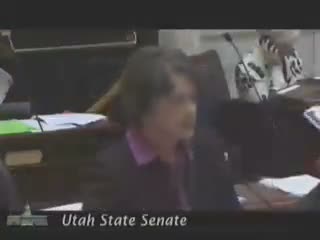
Utah Senate approves bill asserting state control over intrastate firearms sales; critics warn of constitutional, fiscal risks
Summary
The Utah Senate advanced Senate Bill 11, the "Utah State Made Firearms Protection Act," after a floor debate about federal authority under the Commerce Clause. Sponsor Senator Margaret Dayton framed the measure as a Tenth Amendment challenge; opponents cited a constitutional-note predicting likely judicial invalidation and potential state litigation costs.
Senate Bill 11, titled the Utah State Made Firearms Protection Act and sponsored by Senator Margaret Dayton, cleared the Senate floor with a recorded 19-10 vote and was placed on the third-reading calendar.
Dayton told colleagues the bill is meant to assert state authority over goods made and sold entirely within Utah, saying the measure "states in essence that guns made in Utah, sold in Utah as well as ammunition made in Utah, sold in Utah are not subject to federal regulation." She framed the proposal as testing the limits of federal power under the Commerce Clause and cited historical Supreme Court decisions, including Wickard v. Filburn, to explain the constitutional rationale behind the measure.
Opponents urged caution. Senator Romero read the bill's constitutional note on the floor and said the note indicates a strong likelihood the legislation "will be found to be unconstitutional under The United States Constitution Supremacy Clause." Romero recommended pursuing a resolution or engaging the federal delegation rather than advancing a statute likely to face immediate legal challenge.
Senator McAdams and others raised concerns about unintended consequences if states attempt to exempt intrastate manufacturing from federal regulation, citing potential impacts on other regulatory schemes such as consumer-product safety and pharmaceuticals. A different senator reading fiscal-analyst guidance highlighted possible defense costs to the state if the attorney general is required to litigate, noting a mid-level attorney in the AG's office costs roughly $140,000 per year and that more complex cases have previously cost states hundreds of thousands to millions of dollars in outside counsel and litigation expenses.
Dayton said similar legislation has been proposed or enacted in other states and noted that Montana's statute has already been challenged in court; she characterized the litigation as privately funded and said several states are participating in the debate. Dayton emphasized she was not calling for civil disobedience and said the bill is intended as a constitutional test, not a call to immediate unlawful action.
The Senate debate included statements of principle and practical concerns. Several senators explained their votes on the floor: some cited fiscal risk and the constitutional note in opposition, while others cited states' rights arguments or personal connections to manufacturing that influenced a aye vote. With 19 senators recorded in favor and 10 opposed, the measure will remain on the third-reading calendar as the Legislature proceeds through its process.
What happens next: Because the constitutional question is central to the measure's intent, outside litigation or advisory action by the attorney general are likely contingencies. The Senate did not adopt amendments on the floor to narrow the bill's scope during this session's consideration.