Get Full Government Meeting Transcripts, Videos, & Alerts Forever!
Get email alerts on the Judicial Selection topic
No spam. Unsubscribe anytime.
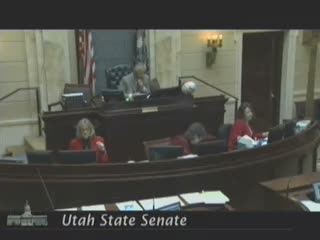
Senate advances law to tighten judicial nomination timelines, increase governor's role amid concerns about politicization
Summary
The Utah Senate passed second substitute Senate Bill 108 on a 21-6 vote after extended floor debate. The bill shifts staffing and some nomination procedures toward the governor, sets statutory timelines for recruitment and confirmation, and changes the number of nominees sent to the governor.
The Utah State Senate on Friday approved the second substitute for Senate Bill 108, a measure that alters the judicial nominating process by increasing the governor’s role and imposing fixed timelines for recruitment and confirmation. The bill passed 21-6 with two senators recorded absent.
Proponents said the bill creates predictability in filling judicial vacancies by setting a recruitment period, a judicial nominating-commission review period and a fixed governor appointment window. Sponsor Senator Jenkins described the timeline and nominee counts in detail, saying the measure "requires the appellate court nominating commission to submit 7 names to the governor for vacancies and requires trial court nominating commission to submit 5 names to the governor on vacancies." The sponsor also explained the statutory timeline for recruitment and confirmation that the bill would impose.
Opponents warned the changes could politicize judicial selection and reduce transparency. "Placing the governor in the middle of this process has the potential of politicizing the selection of judges," Senator Romero said on the floor, urging caution and highlighting opposition voiced by the Utah State Bar’s elected commissioners. Other senators questioned whether the fixed timelines would leave adequate time for public input, for background checks, or for deliberate use of vacancies amid budget constraints.
Several senators asked how background checks would fit the new timetable; Senator McAdams noted confusion about which entity performs candidate background checks and later confirmed the FBI does not perform the state’s judge checks. Sponsors said they would follow up on procedural questions and consider technical fixes before third reading.
Senators debating the bill raised three recurring concerns: whether shorter statutory deadlines would limit public notice and opportunities to surface disqualifying information; whether placing administrative staffing under the governor would weaken judicial independence; and whether the timelines would force appointments that carry fiscal or operational impacts for the courts. The bill’s sponsor said the legislation was designed to end what he described as gamesmanship that leaves judicial vacancies open for extended periods.
The Senate placed the second substitute at the bottom of the third-reading calendar for final consideration, after recording the 21-6 vote.