Get Full Government Meeting Transcripts, Videos, & Alerts Forever!
Get email alerts on the Water Policy topic
No spam. Unsubscribe anytime.
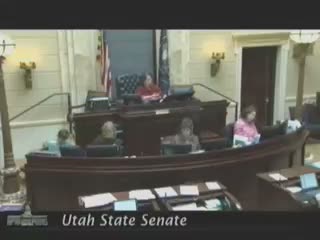
Senate debates rainwater-harvesting bill; sponsor says it is a narrow exception to water law
Summary
Senate Bill 32 would allow homeowners to capture and store up to 2,500 gallons of precipitation on their property (in covered containers; max 55 gallons per container), a sponsor said, and the chamber discussed water-law and public-health safeguards before approving the bill for third reading.
Senate Bill 32, the rainwater-harvesting measure sponsored by Senator Jenkins, drew extended debate on the Senate floor about its scope and potential unintended consequences.
Senator Jenkins said the bill "gives you the right to capture and store precipitation on a property owned or leased by a person in an underground storage container," and described the policy as a narrow carve-out to permit limited capture (maximum total storage of 2,500 gallons) and require covered containers (maximum 55 gallons per container) and installation in accordance with relevant building codes.
Several senators asked whether the bill would change Utah’s prior-appropriation water regime. Senator Valentine asked directly whether the bill would convert state law from prior appropriation to riparian rights. Senator Jenkins replied, "No, this is not intended to change that. I would never do that," and said the intent is to carve out a limited exception for small-scale capture and on-site use.
Senator McAdams raised health and implementation concerns, asking whether municipalities or water providers would retain the ability to inspect or otherwise monitor installations to prevent cross-connections or backflow into public systems. Jenkins said the statutory language requires installation in accordance with building codes that prohibit cross-connections but acknowledged the bill does not create a separate inspection mandate; he said the approach was chosen to keep the measure simple while relying on existing building-code protections.
Senators expressed mixed views about scale and enforcement. The sponsor and supporters emphasized the modest storage cap and the bill’s goal of allowing residents to irrigate small gardens or conserve culinary water; critics urged attention to oversight, public-health safeguards and any downstream impacts. After debate, the Senate placed SB32 on the third-reading calendar following a roll-call placement reported as 19 yea and 2 nay votes.
The bill’s next steps are third reading in the Senate and referral to the House if enacted on final passage.