Get Full Government Meeting Transcripts, Videos, & Alerts Forever!
Get email alerts on the Education.charter Schools topic
No spam. Unsubscribe anytime.
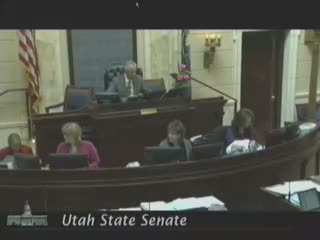
Senate advances House Bill 388 on charter-school accountability after contentious floor debate
Summary
The Utah Senate debated House Bill 388 on charter school accountability—sponsors argued it clarifies performance standards and auditing; opponents warned it could constrain charter authorizers and harm school outcomes. The bill passed and was placed on the third-reading calendar.
House Bill 388, a measure aimed at strengthening accountability for charter schools, was the focus of extended debate on the Senate floor. Sponsor Senator Adams said the bill reaffirms that charter schools must be accountable to their chartering entity for performance “as provided in the school's charter,” and that the measure preserves auditing and evaluation requirements already in statute and the school's charter. He said the bill would help ensure consistent performance measures across chartering entities and the state.
Senator Jones, citing a letter from the head of the National Association of Charter School Authorizers, warned that the bill “represents a significant risk for Utah's charter school community” and could, as seen in other states, lead to lower student outcomes and fewer charter schools. Jones said some states that used similar approaches saw a mix of excellent and many low-performing charters, which created political backlash and caps that made it harder for quality charters to open.
Senator Adams responded that the letter was “misdirected,” stressing that HB 388 maintains that the chartering entity — whether a district, state charter board, or institution of higher education — remains responsible for setting standards and evaluating schools, and that the bill merely clarifies the relationship between the charter and the chartering entity.
Senator Morgan expressed concerns that the bill could “tie the hands” of local public charter school boards and limit their role; Senator Stephenson defended the bill as ensuring uniform evaluation standards so charters can be compared to district schools on the same measures. There were multiple requests from senators for further discussion, but the sponsor waived summation and moved the bill for third reading.
The Senate recorded the bill as passed on the floor and placed it at the bottom of the third-reading calendar; specific roll-call tallies and named vote counts for final passage were not specified in the transcript of that action.