Get Full Government Meeting Transcripts, Videos, & Alerts Forever!
Get email alerts on the Session Roundup topic
No spam. Unsubscribe anytime.
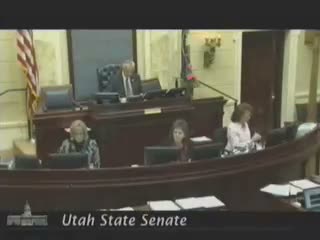
Senate finishes busy morning: dozens of concurrence and third‑reading bills pass, including education, mining and public‑safety measures
Summary
On the final morning of the session the Utah Senate processed a lengthy concurrence and third-reading calendar: dozens of bills were concurred or passed, from mining regulation and voting‑center changes to motions-picture incentives and several education bills; conference committees were appointed where House and Senate amendments differed.
The Utah Senate moved through a heavy concurrence and third-reading calendar on the last day before lunch, approving a long list of bills the House had transmitted and taking final votes on many measures.
Items the chamber approved and returned to the House for final action included, among others: Senate Bill 51 (local sales/use tax amendments for cultural organizations), SB72 (initiative coordination amendment), SB282 (small mining operations scope), SB209 (telecommunications assessment clarification), SB236 and SB226 (referendum and cleaner-fuel tax credit bills), HB303 (prepaid wireless 9‑1‑1 charge), HB316 (taxation of surplus lines), HJR34 (Rio Grande Depot lease discussions), HB412 (land‑use revisions for therapeutic schools), HB177 (K‑9 body‑armor checkoff account), HB493 (Washington County veterans home funding), and the sunscreen of many other technical and policy bills. The Senate also took up SB320 (deposit of severance tax revenues into the permanent state trust fund), which raised the revenue trigger from $71 million to $76 million and passed under suspension of the rules.
A number of bills required floor negotiation: SB65 (statewide online education program) was concurred with House amendments that restrict outside providers to in‑state, approved public providers; SB57 (community-cat hold period) was amended in the House and the Senate concurred to extend the holding period to five days; SB261 (trust‑deed/foreclosure reform) concluded with stakeholders’ language and was returned to the House. Where the Senate and House disagreed, the Senate refused to concur and requested conference committees (for example, SB305, economic development through education alignment). Conference committees were appointed on several matters.
Several substantive measures drew extended floor debate (highlighted in separate articles), while numerous other technical and policy items passed on voice or roll‑call votes. The chamber recessed for lunch after completing the bulk of the morning’s calendar and scheduled further second‑reading items for afternoon consideration.