Get Full Government Meeting Transcripts, Videos, & Alerts Forever!
Get email alerts on the Local Government Funding topic
No spam. Unsubscribe anytime.
Senate adopts compromise to end contested Salt Lake County police fee, gives counties transition time
Summary
Lawmakers approved a negotiated substitute to terminate a controversial local 'police fee' and provide counties until the end of 2011 to realign budgets. Sponsor described the change as the result of stakeholder negotiations and emphasized it avoids retroactive refunds.
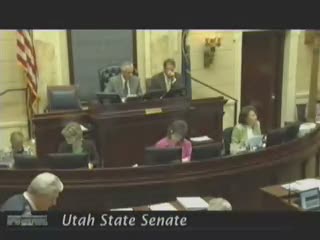
Senators approved first substitute House Bill 226 after sponsor remarks that the measure represented a negotiated compromise among counties and municipalities affected by local policing and service fees.
Senator Bramble, sponsor on the floor, said HB 226 prohibits certain service-area fees (described by speakers as the much-criticized 'police fee' in Salt Lake County) while providing an extension period for counties and cities to adjust their budgets. He recounted the bill’s evolution—from an initial proposal that would have required refunds, to an immediate termination approach, to the compromise that set a termination date at the end of the year. The sponsor said stakeholders including municipal officials and unincorporated area representatives participated in weeks of negotiations to reach the text on the floor.
Senator McAdams asked clarifying questions about whether the legislative compromise would provide a defined timeframe to transition franchise or municipal fee arrangements; the sponsor confirmed the bill gives jurisdictions to December 31, 2011 to realign budgets and that municipal franchise-fee authority would be removed from future consideration under this bill. Senator McAdams recorded that he was voting 'aye with a conflict' due to his employer affiliation.
The vote carried with 24 yeas and no recorded nays; the bill will be placed on the third-reading calendar for subsequent procedural steps. Sponsor remarks framed the bill as a practical resolution that avoided disruptive refunds and allowed local governments time to adjust.