Get Full Government Meeting Transcripts, Videos, & Alerts Forever!
Get email alerts on the Immigration topic
No spam. Unsubscribe anytime.
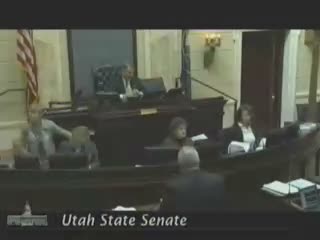
Utah Senate passes immigration accountability bill, backing state guest-worker and enforcement provisions
Summary
After weeks of negotiation and floor amendments, the Utah Senate passed third substitute House Bill 116, a package that creates a state guest-worker pathway, employer verification and penalties, and a law-enforcement-focused enforcement framework. Sponsors framed the measure as a state response to federal inaction.
SALT LAKE CITY — The Utah Senate on March 3 passed third substitute House Bill 116, titled the Utah Immigration Accountability and Enforcement Amendments, sending a consolidated immigration package back to the House after a conference committee and floor amendments.
Senator Reid, the bill sponsor on the floor, said the package combines three elements: a guest-worker permit program, employer requirements and sanctions, and enforcement provisions. “This substitution essentially has 3 elements to it — a guest worker provision, employer requirements and sanctions and enforcement provisions,” Reid said during his floor introduction.
The bill requires rigorous background checks and creates a state-administered worker-permit system with employer-verification provisions. It includes penalties for employers who do not verify workers: a first civil penalty of $100 per unauthorized employee, $500 for a second violation, and for repeated violations a civil penalty of up to $10,000 or loss of professional licensing. Sponsors said employers who enroll in the prescribed verification systems (E-Verify or the bill’s state “U-Verify”) would receive safe-harbor protection.
Senator Bramble, who led much of the drafting effort, described the measure as an attempt to manage immigration realities at the state level. “This is our effort to say to the federal government, you’ve left us no choice but to do something,” he said, urging colleagues to support a compromise that includes enforcement, labor protections and a path for certain workers.
Lawmakers debated enforcement and family provisions at length. The bill as adopted keeps a delayed implementation date and places application fees and related receipts into a restricted account intended to fund administration and enforcement costs. Sponsors said the fiscal note estimates roughly $11.5 million in one-time education-fund revenue in the first year, and additional one-time set-up costs in the next fiscal year.
The Senate accepted a floor amendment moving primary program administration to the Department of Public Safety so background checks could be coordinated with BCI and the FBI; Senator Robles presented that amendment as friendly and it was adopted.
Opponents raised constitutional and practical concerns, including whether the state could legally enact aspects of the scheme and how it would interact with federal immigration law. Some senators urged extended interim study and further federal engagement before full implementation. Sponsors emphasized the delayed implementation date and a stated intent to seek federal waivers where necessary.
The Senate adopted the conference report for the third substitute and recorded final passage. The measure will be returned to the House in its amended form; conferees filed a conference report specifying agreed changes, including removal of earlier in-state-tuition language from the version negotiated on the floor.
What’s next: The House will receive the conference report. Sponsors indicated they expect additional work during the interim, including outreach to federal authorities to secure any necessary waivers or clarifications prior to the bill’s scheduled implementation.