Get Full Government Meeting Transcripts, Videos, & Alerts Forever!
Get email alerts on the Education District Splits topic
No spam. Unsubscribe anytime.
Senate Approves Three‑Bill Package to Govern School‑District Splits
Summary
On a largely unanimous consent calendar, the Utah Senate passed three bills setting rules for school district splits: HB195 on debt obligations, HB275 on tax‑levy allocations and HB262 on division of assets and liabilities; all three passed with unanimous recorded yea votes and will be returned to the House.
The Utah Senate moved to consolidate and advance three bills that set legal and operational rules for school district divisions, passing them on voice and recorded consent votes and placing them for final processing back to the House.
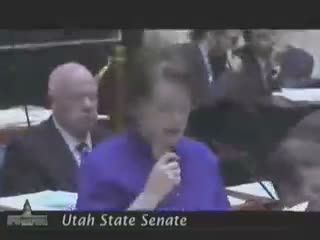
Senator Dayton presented the three bills as a package developed with an arbiter and members of the education community. House Bill 195 (Debt Service Obligations of the Divided School District) establishes that when a district splits a snapshot of debt obligations will be taken and a "virtual district" encompassing property owners who voted on bonds will continue paying the bonds. The Senate recorded 24 yea, 0 nay and 4 absent on HB195 and the bill was signed by the president in open session for return to the House for the speaker’s signature.
House Bill 275 (School District Division Amendments) modifies property‑tax levies to accommodate students in new districts, splitting tax revenue between districts based on student population but excluding state basic, debt‑service and judgment levies. The Senate suspended the three‑day wait for consent and recorded 23 yea, 0 nay and 6 absent; HB275 will be returned to the House for signature.
House Bill 262 (Divided School District Assets and Liabilities) codifies arbiter decisions used in the Jordan School District split. Senator Dayton described rules for handling furnishings (stay with the physical building), discretionary assets (distributed between districts), nondiscretionary assets such as laptops (remain with employees) and school buses (divided proportionally by student population; if half are older and half newer, age distribution is equalized). The Senate recorded 23 yea, 0 nay and 6 absent; HB262 was placed on the third‑reading calendar.
Senator Dayton thanked the education community and the House sponsor for work on the language and said the intent of the package is to avoid the frustration experienced during previous splits. The bills will now return to the House for final signatures or third‑reading scheduling as appropriate.