Get Full Government Meeting Transcripts, Videos, & Alerts Forever!
Get email alerts on the Tax Policy topic
No spam. Unsubscribe anytime.
Utah Senate approves sales-tax overhaul, restores portion of food tax and adopts small rate change
Summary
The Utah Senate voted to pass Senate Bill 270, a package of sales-and-use-tax changes that restores part of the sales tax on food and adjusts the state rate; an amendment reduced the sponsor’s proposed state rate from 4.38% to 4.35% after debate about revenue impacts.
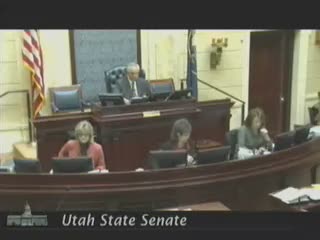
SALT LAKE CITY — The Utah Senate on Day 35 approved Senate Bill 270, a set of changes to the state sales-and-use tax that restores a portion of sales tax treatment for food and adjusts the state portion of the rate. Sponsor Senator Adams said the package is intended to stabilize the sales‑tax base and make Utah more competitive with out‑of‑state internet sales.
Supporters said the bill flattens volatility in sales tax revenue that funds the general fund; opponents warned it effectively reintroduces a tax on groceries. “If you are eating food and buying food, you will pay more for it and it is an increase,” said Senator Romero, who opposed the measure.
Senator Stevenson proposed and won an amendment to change the state rate on line 1986 from 4.38% to 4.35% to ensure the bill did not produce a net tax increase in the initial budget year. Fiscal material discussed on the floor showed an estimated net loss of about $983,000 in the first budget year under the amendment, with larger reductions in later years (projections cited on the floor: 2013 roughly $7.16 million, 2014 roughly $13.88 million), a result senators used to argue for and against the adjustment. Senator Adams said the legislation would “flatten growth” and that targeted tax relief for low‑income households would be better delivered through credits.
After debate and the successful motion to amend, the Senate adopted final passage on a roll call (19 yeas, 9 nays, 1 absent). The bill will be transmitted to the House for its action.
The final Senate actions recorded on the floor included the amendment to set the state portion to 4.35% and the passage vote. Implementation details and exact fiscal impacts depend on subsequent committee work and any House changes.