Get Full Government Meeting Transcripts, Videos, & Alerts Forever!
Get email alerts on the Service Contracts topic
No spam. Unsubscribe anytime.
Utah Senate approves notice requirement for long-term service contracts
Summary
The Utah Senate approved First Substitute House Bill 194 on Feb. 25, 2011, extending automatic-renewal notice requirements to certain long-term service contracts related to real property, supporters said the measure preserves contracting freedom while adding a simple disclosure to protect small businesses and associations.
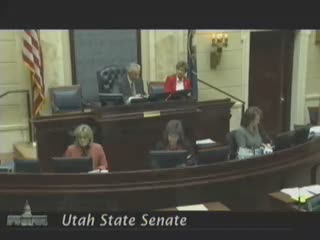
The Utah Senate voted on Feb. 25 to advance First Substitute House Bill 194, the Service Contracts Act amendments, requiring sellers of qualifying long-term service contracts to provide written, prominent notice when an automatic renewal window opens. Sponsors and supporters said the change would not prohibit long-term contracts but would give the contracting party a clear opportunity to opt out.
Supporters said the bill closes a gap in existing statute by offering businesses the same notification protections already afforded to private citizens and many nonprofits. "All it does is it offers the same reasonable protections to a business that we already offer to private citizens and to nonprofits," said Senator Thatcher, the sponsor, during floor debate. Senator Christiansen recounted a personal example of a small business locked into an automatically renewing garbage contract and urged the measure as a protection for less sophisticated operators.
The bill is limited in scope to service contracts connected with real property and long-term contracts (the current text differentiates one-year renewals from longer-term renewals, with the notice focusing on contracts that extend beyond a single year). Senators asked repeated questions on whether the measure would prevent businesses from entering contracts; the sponsor repeatedly said it would not. The floor discussion clarified that the requirement is a disclosure obligation—placing a prominent notice on billing or other customer communications stating the upcoming renewal and the opportunity to opt out, for a specified window (sponsors discussed a 30-day notice period).
Debate touched on industry engagement: sponsors said large service providers (including waste haulers) participated in negotiations. Senator Jenkins and others proposed a simple statutory phrasing for written notice, and Senator Madsen signaled interest in amendments on third reading to ensure equal nonprofit treatment. Senator Thatcher urged passage, calling the bill "clean" and "concise," and saying it strikes a balance between transparency and contractual freedom.
On the roll call the Senate advanced the bill; the clerk recorded the bill as having passed the second-reading vote and ordered it read for a third time for final passage. (Roll-call and procedural record in the transcript.)
The next procedural step is third reading on the Senate calendar.