Get Full Government Meeting Transcripts, Videos, & Alerts Forever!
Get email alerts on the Historic Districts Moratorium topic
No spam. Unsubscribe anytime.
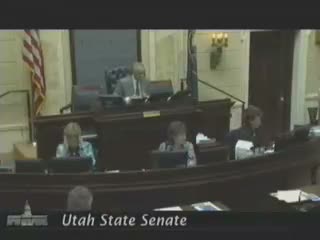
Senate approves one-year moratorium on creating historic districts after heated debate
Summary
The Utah Senate approved Senate Bill 243, which imposes a one-year moratorium on creating historic districts (with voluntary participants exempted by amendment) to allow lawmakers and stakeholders to clarify processes and property-rights protections. The bill passed on a recorded vote after extended floor debate about property rights and demolition risks.
The Utah Senate voted to advance Senate Bill 243, a one-year moratorium on creating historic districts, after an extended floor debate that centered on private property rights and the limits of local versus state authority.
Senator Niederhauser, sponsor of Senate Bill 243, told colleagues the legislation was prompted by controversy in Salt Lake City: "This bill is a result of a controversial historic district that has been brewing in Salt Lake City," and he said the moratorium would give the Legislature and interested parties time to "discover whether what we have in statute is the right policy for the state of Utah with regards to property rights and process in implementing a historic district." He moved Amendment 1, which exempts areas voluntarily seeking historic designation; the amendment passed on the floor.
Supporters described the moratorium as a cooling-off period. Senator Dayton said the bill addresses deep concerns about property rights and community acrimony and called the pause "the only way to solve the conflict" in the affected community. Senator Stevenson, who said he sat through the committee hearing, urged support, citing the large size of the proposed district and the difficulty communities face under strict historic-district rules.
Opponents warned the moratorium could leave vulnerable properties unprotected. Senator Morgan said a year-long pause without demolition protections would "mean that you have a year where demolitions and these huge remodels can continue," leaving preservationists exposed. Senator Romero, speaking from the Allecrest community, said he preferred local solutions: "I think this is an issue that should be handled at the local level." The sponsor acknowledged the bill does not include a demolition moratorium.
On final action the Senate adopted the sponsor's motion to read the bill for a third time and recorded a roll-call vote. The clerk reported the result as 20 yeas, 6 nays, and 3 absent; the bill will be forwarded to the House for further action.
The sponsor said his intent during the moratorium is to "work with the interested parties over the interim and, if necessary, come back with some legislation to clarify process and historic districts," focusing on process improvements and voluntary buy-in rather than wholesale prohibition.
The Senate debate included questions about scope and process, an explicit floor amendment preserving voluntary sign-ups, and concern from several senators that the moratorium—without additional protections—could create more conflict rather than resolve it. The bill's next procedural step is consideration in the House.