Get Full Government Meeting Transcripts, Videos, & Alerts Forever!
Get email alerts on the Legislative Roundup topic
No spam. Unsubscribe anytime.
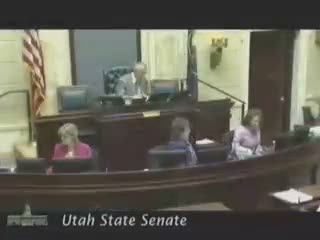
Senate floor roundup: HB 19, HB 238, SB 180 and a string of bills advance or fail
Summary
On Feb. 18 the Utah Senate adopted committee reports, passed and failed several bills on the second and third reading calendars: notable actions include final passage of first substitute HB 19, third‑reading passage of HB 238 (radiology licensing), advancement of SB 180 (Medicaid reform) to third reading, failure of SB 96 (alimony amendments), and passage of SB 159, SB 177, SB 191 and others.
The Utah Senate's Feb. 18 floor session covered a long list of committee reports, bill introductions and votes.
Key outcomes at a glance
- First substitute House Bill 19 (insurance law amendments): The Senate concurred with a joint conference committee report and passed the bill; recorded result reported as 23 yeas, 0 nays, 6 absent; the measure will return to the House for further action.
- House Bill 238 (Radiologic Technologist and Radiology Practical Technician Licensing Act): Presented and supported on the floor; passed on third reading (24 yeas, 0 nays, 5 absent) and will be returned to the House for the Speaker’s signature.
- Second substitute Senate Bill 180 (Medicaid reform): After extended debate, the bill was advanced to the third‑reading calendar (recorded roll call: 26 yeas, 0 nays, 3 absent). See the separate report for details and key sponsor timelines.
- Third substitute Senate Bill 96 (alimony amendments): The bill failed on a roll call (11 yeas, 17 nays, 1 absent) and was returned to the Rules Committee and filed.
- Senate Bill 159 (offender registry revisions): Amendment 1 adopted; the bill passed on third reading (27 yeas, 0 nays, 2 absent) and will be placed at the bottom of the third reading calendar.
- Senate Bill 177 (Security Agency Qualification Amendment): Minor technical amendment adopted; bill passed (27 yeas, 0 nays, 2 absent) and will be moved to the third‑reading calendar.
- Senate Bill 191 (workers’ compensation waiver oversight): Sponsor described this as the final set of reforms from the misclassification task force; roll call result reported 23 yeas, 0 nays, 6 absent and the bill will be placed on the third‑reading calendar.
- First substitute Senate Bill 67 (annual vision screening for K–3): Sponsor proposed extending screening and requiring parent notification and limited immunity for volunteer screeners. The Senate passed the bill by roll call (transcript roll call entry reads as 21 yeas, 4 nays, 4 absent) and placed it on the third‑reading calendar.
Other floor activity included numerous 'circle' and 'uncircle' procedural motions to move bills between calendars, adoption of committee reports that placed bills on the second‑reading calendar, and interchamber communications that the House had transmitted several substituted bills and concurrent resolutions for Senate consideration.
What the roll calls show about floor dynamics
Several bills passed unanimously or with strong majorities; a few — notably the alimony amendment (SB96) — drew sustained opposition and failed. Senators used the floor to probe fiscal notes, raise concerns about local impacts (for example ambulance reimbursements tied to Medicaid rates), and press sponsors on administrative readiness (Department of Health support and waiver timelines for SB180).
Procedural notes
- Several bills were 'circled' for later consideration and others were 'uncircled' and moved forward, a common calendar management practice when members want time to prepare amendments or votes.
- The Senate received multiple messages from the House noting passage of substituted measures and resolutions, which were referred to the Rules Committee for action.
This roundup is drawn from the Senate floor transcript of Feb. 18, 2011. For SB180, see the companion article focused on the Medicaid debate and procedural timelines.