Get Full Government Meeting Transcripts, Videos, & Alerts Forever!
Get email alerts on the Alcohol Licensing topic
No spam. Unsubscribe anytime.
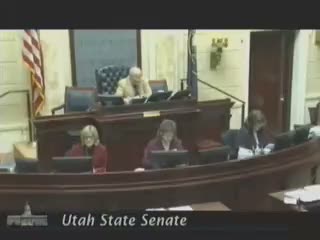
Senate passes broad rewrite of alcohol licensing; allows online training, creates new license categories
Summary
The Utah Senate passed SB314, an overhaul of alcohol licensing that increases restaurant licenses, reduces tavern quotas, creates new license types (including reception and beer-only licenses), clarifies conflict-of-interest rules for regulators, and permits online training with supervised testing.
The Utah Senate on Feb. 25 approved Senate Bill 314, a package of alcohol licensing and regulatory changes that sponsors and supporters said aims to balance economic development with public-safety protections.
Sponsor Senator Valentine told colleagues the bill addresses a licensing shortage and rebalances permits to favor restaurants over taverns. "We're out of licenses for restaurants. We have additional capacity for taverns," he said, arguing that restaurants provide stronger economic benefit to communities.
The bill increases the number of restaurant licenses by 40, creates new license types (including a beer-only restaurant and a beer-only recreational facility with no quota), and establishes a reception license intended to allow wedding and reception centers to serve alcohol under defined training, insurance and storage rules. Taverns remain subject to a quota that is reduced to reflect the new restaurant authorizations.
Valentine and other supporters also pushed amendments aimed at clarifying conflicts-of-interest and enforcement staffing. Amendment No. 4, adopted on the floor, narrowed the scope of conflict-of-interest restrictions so they apply to supervisory employees and those directly involved in licensing and compliance. Valentine said the change was intended to avoid sweeping prohibitions that were never the bill’s intent.
On the question of training, an amendment adopted late in the debate permits online instruction while requiring that testing and certification be administered in the physical presence of an authorized instructor. "It permits online training, but now says that the testing and certification has to be in the presence of an instructor who is authorized to administer the test," Valentine said when explaining the change.
Senators raised a mix of concerns during debate, including potential geographic concentration of transferred licenses and fiscal implications for enforcement. Senator Urquhart offered and won an amendment to delay or limit license transferability into Salt Lake City to address local market concentration. Senator Jones asked about fiscal implications and whether a fiscal note would be finalized before third reading; the sponsor said the fiscal note was being prepared and indicated a willingness to provide it.
After amendment and debate, the Senate passed SB314 on a roll-call vote and the measure was sent forward for final processing.
The bill sets an effective date for parts of the statutory changes and includes provisions to phase in transferability and other regulatory details; sponsors said technical drafting adjustments remain possible before final enactment.