Get Full Government Meeting Transcripts, Videos, & Alerts Forever!
Get email alerts on the Education Governance topic
No spam. Unsubscribe anytime.
Senate approves constitutional amendment to place K–20 education governance under governor; measure moves to House
Summary
Senate Joint Resolution 9, sponsored by Senator Reid, would amend Utah’s constitution to give the governor authority to coordinate K–20 education. Supporters said it creates accountability; opponents warned it risks politicizing education. The Senate passed the resolution 22–6; it will be transmitted to the House.
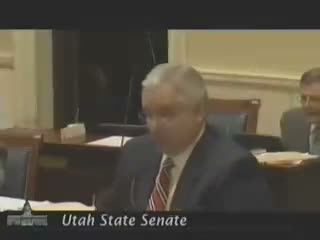
Senate Joint Resolution 9, a proposed constitutional amendment to bring K–20 education governance under the governor, passed the Utah Senate on a roll-call vote after an hour of debate.
Senator Howard A. Reid, the resolution’s sponsor, told the chamber the measure is intended to create a single ‘‘champion’’ for education who can coordinate programs across K–20 and align education with statewide goals. ‘‘The time has come in our history where Utah needs to decide whether it wants to excel in education or not,’’ Reid said, arguing the state had fallen behind national peers and needed centralized leadership to improve student achievement.
Supporters—including Senator Jerry Stevenson—said the change would reduce the number of decision-making ‘‘steering wheels’’ and create clearer accountability. Stevenson said the reform is ‘‘the elegant answer to fixing public education and bringing greater accountability.’’
Opponents countered that the shift risks concentrating power and reducing local voice. Senator Davis said she had ‘‘real concerns’’ about weakening local control and warned that putting authority in a single executive could undermine community input. Senator Romero cautioned that the governor already has many priorities and added education to that burden could be a distraction.
Senator Reid acknowledged those concerns and said interim legislation would define enabling details, including transition provisions and protections for existing board members. ‘‘I would not have any objection for those individuals on the board today to continue and serve out their terms,’’ he said, while urging the Senate to allow voters to decide the amendment.
The resolution passed the Senate, 22 yea to 6 nay with 1 absent. It will be forwarded to the Utah House of Representatives for the next steps required for a constitutional amendment.
Next steps: If the House approves the resolution in the same session, the proposal would proceed according to the constitutional amendment process described in state law before reaching voters.