Get Full Government Meeting Transcripts, Videos, & Alerts Forever!
Get email alerts on the Medicaid Community Service Pilot topic
No spam. Unsubscribe anytime.
Utah Senate advances pilot that would require select Medicaid recipients to perform community service
Summary
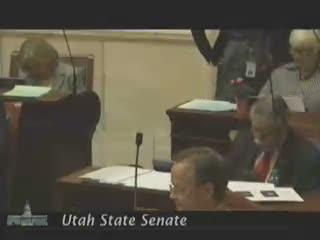
The Utah Senate voted to advance House Bill 211, directing the Department of Health to design a pilot that would identify fewer than 100 able-bodied Medicaid enrollees to perform community service as part of a limited program contingent on a federal waiver. The measure prompted heated floor debate over whether the pilot is punitive or a narrow test of work-readiness strategies.
The Utah Senate voted to advance House Bill 211, a measure directing the Department of Health to develop a community-service pilot program for certain Medicaid recipients enrolled in the Primary Care Network. Sponsor Senator Bramble told colleagues the pilot would "identify less than 100 Medicaid recipients who are capable of providing community services" and that it would exclude children and people with significant disabilities and "require a waiver from CMS" before implementation.
Proponents framed the proposal as a narrow test intended to increase beneficiaries' engagement and to evaluate whether limited service requirements could help participants develop work-related skills. Senator Bramble said the program would "provide a mechanism for them to contribute back in exchange for the services that they're being provided." Supporters including Senator Valentine described the measure as a modest pilot targeted at able-bodied, unemployed adults and defended it as one way to address cost and participation concerns.
Opponents called the approach punitive and questioned the ethics and mechanics of conditioning benefits on service. Senator Robles said he had "a lot of problems" with the legislation and that it risked "penalizing people for being poor." Senator Romero argued the measure could undermine volunteerism and urged policymakers to prioritize employment-first solutions.
Lawmakers also pressed sponsors on procedural and operational questions. Senators asked whether participation would be voluntary or selected, what would happen if a participant refused to perform service, and whether the program would treat Medicaid recipients equitably. Sponsor responses repeatedly pointed to the bill's text and the need for a federal waiver: the bill directs the Department to present a proposal to the Legislative Health and Human Services Interim Committee by November 30 and to apply for a Centers for Medicare and Medicaid Services (CMS) waiver by January 1, 2012; the waiver and subsequent department rules would define enrollment and consequences.
The bill specifically limits participation to people who are "physically fit and mentally able," are enrolled in the Primary Care Network, and are typically unemployed; sponsors said the pilot would not enroll children or people with significant disabilities. Debate on the Senate floor included procedural moves (a call of the Senate) and repeated requests for clarification; sponsors said the pilot is intentionally narrow and intended to test policy before broader application.
On final action in this floor sequence, the Senate recorded a roll-call placing House Bill 211 on the third-reading calendar with 22 yeas, 5 nays and 2 absent. Next steps stated on the floor are for the Department of Health to develop the implementation proposal and to seek the required federal waiver before any program could begin.
Provenance: The bill was introduced and discussed across the transcript beginning with the bill title and sponsor remarks when the item was called (introduction) and continuing through extended floor debate and the roll-call reported placement on the third-reading calendar. The text above is drawn from the sponsor's presentation, the sustained exchange among senators who opposed and supported the bill, and the recorded vote.