Get Full Government Meeting Transcripts, Videos, & Alerts Forever!
Get email alerts on the Securities Fraud topic
No spam. Unsubscribe anytime.
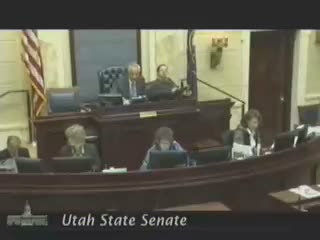
Senate advances bill to enhance penalties for securities fraud involving vulnerable adults
Summary
Senate Bill 101 would increase penalties—potentially elevating some securities fraud cases from third- to second-degree felonies—when crimes target vulnerable adults or involve undue influence; the sponsor cited an FBI estimate of $1.4 billion in fraud under investigation in Utah.
SALT LAKE CITY — Senator McAdams introduced Senate Bill 101 on Feb. 25, a measure to add penalty enhancements for securities fraud committed against vulnerable adults or through "undue influence." The sponsor framed the bill as a tool to punish particularly exploitative perpetrators and to provide judges an aggravating factor when sentencing.
"Over the course of the last year... the FBI was reporting where they say that they are currently investigating fraud in Utah totaling $1,400,000,000," Senator McAdams told the chamber, using the figure to underscore the prevalence and seriousness of fraud investigations in the state.
The bill would not create a new underlying offense; prosecutors must first prove securities fraud. If the enhancement conditions are met—victim vulnerability or use of undue influence—the offense class could increase, allowing judges to impose longer terms and larger fines. The sponsor emphasized the measure does not create mandatory minimums but provides sentencing tools.
Senator Jenkins asked how the bill avoids penalizing legitimate advisors and professionals who lawfully advise investors. McAdams acknowledged the drafting challenge and said the bill explicitly excludes relationships formed in the ordinary course of regulated investment services and licenses, narrowing the enhancement to relationships unrelated to ordinary investment-advice contexts.
Supporters on the floor described traumatic testimony from victims, while skeptics worried additional prison time could reduce prospects for restitution. Senator McAdams said restitution is rarely obtained in these cases and that the enhancement signals legislative intolerance for predatory conduct.
The Senate placed SB101 on the third-reading calendar; the clerk recorded first substitute SB101 passed the floor vote 23 yea, 0 nay, 6 absent.
What’s next: SB101 advances to third reading. Legislative and prosecutorial offices will need to refine guidance for prosecutors and judges on applying the undue-influence definitions in practice.