Get Full Government Meeting Transcripts, Videos, & Alerts Forever!
Get email alerts on the Tax Domicile topic
No spam. Unsubscribe anytime.
Senate advances tax-revision bill that uses school enrollment to help define domicile
Summary
Senate Bill 21, advanced to third reading, creates a three-tier test for domicile that uses a dependent child's school enrollment as a bright-line factor in determining state income-tax residency, prompting concerns about interstate conflicts and litigation.
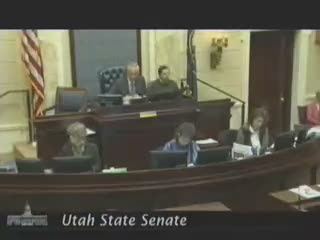
SALT LAKE CITY — The Utah Senate on Feb. 25 advanced Senate Bill 21, a sweeping set of tax revisions that would change how the state determines whether an individual is domiciled in Utah for income-tax purposes.
Senator Michael Niederhauser, sponsor of SB21, told the chamber the measure implements a three-tier test intended to give clearer guidance to taxpayers and practitioners. The bill makes school enrollment for dependent children a bright-line factor: if a taxpayer has a dependent enrolled in Utah public schools, the bill presumes domicile in Utah for tax purposes and would bring worldwide portfolio income under Utah taxation.
"The first is a bright line that if you have children, in our education system, you're going to be determined as domiciled here for tax purposes, which brings in all your worldwide income," Niederhauser said, explaining the bill's core framework.
Senators who spoke during floor debate praised the collaborative interim work behind the bill but warned it may create conflicts with other states. One senator said the change "may very likely create some conflicts down the road with other states that claim similar domicile" and urged caution, particularly for noncustodial parents and for portfolio-income taxation.
Senator Bramble and others said amendments were made that address some noncustodial-parent situations but cautioned the bill could trigger litigation over competing residency claims.
Niederhauser said the bill also incorporates a rebuttable presumption tied to taking the primary resident exemption on property and restates a third tier that largely codifies prior code language and Tax Commission practice.
Despite the concerns, the floor voted to place SB21 on the third-reading calendar. The clerk announced first substitute SB21 passed the floor vote 22 yea, 0 nay, with 7 senators absent.
What’s next: SB21 moves to third reading. Sponsors and committee staff will likely respond to questions from practitioners and local tax authorities about implementation and interstate coordination before the Senate's final consideration.
Source: floor remarks by Senator Michael Niederhauser and recorded roll-call announcements on Feb. 25.