Get Full Government Meeting Transcripts, Videos, & Alerts Forever!
Get email alerts on the Federal State Relations topic
No spam. Unsubscribe anytime.
U.S. Sen. Orrin Hatch tells Utah senators he supports state-led solutions, discusses immigration and budget reform
Summary
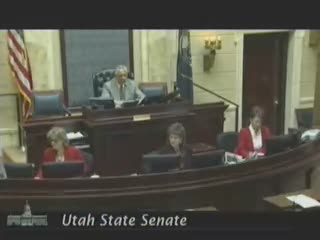
Sen. Orrin Hatch addressed the Utah State Senate in a Committee of the Whole on Feb. 4, praising state governance, endorsing state-focused solutions to federal overreach, and answering senators on immigration, healthcare, and entitlement reform.
U.S. Senator Orrin Hatch addressed the Utah State Senate in a Committee of the Whole on Feb. 4, 2011, discussing federalism, health-care reform, immigration enforcement and the national budget.
Hatch opened by praising state lawmakers—'This state is well run'—and said he and the Utah delegation take state concerns seriously. On the Tenth Amendment and federal encroachment, he said the Senate delegation shares the Legislature’s view that many powers should remain with states.
On health care, Hatch said he had supported state-centered proposals and earlier efforts to create state-run exchanges rather than centralized federal control. He described the partisan process that led to the federal health-care law and said he would continue seeking alternatives and litigation strategies where appropriate.
Senators asked about actions to curb executive-rulemaking and about entitlement reform. Hatch said he supports measures to restrain executive action and to pursue structural fixes to entitlements; he cited his new role on the Senate Finance Committee and argued that addressing long-term liabilities in Social Security, Medicare and Medicaid will require bipartisan work.
On immigration, Hatch urged securing the border first as a prerequisite for broader reform. He outlined enforcement steps and said Congress must develop a bipartisan approach; he indicated he would 'work on it' given his committee positions.
The Committee of the Whole concluded after questions from multiple senators and the Senate returned to regular session.