Get Full Government Meeting Transcripts, Videos, & Alerts Forever!
Get email alerts on the Legislative Commissions topic
No spam. Unsubscribe anytime.
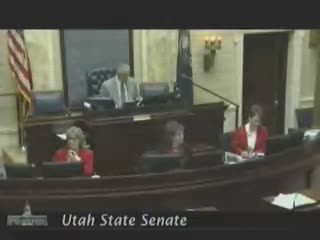
Senate advances bill to limit Constitutional Revision Commission’s self-initiation after heated floor debate
Summary
After extended debate on Feb. 4, 2011, the Utah Senate amended and advanced Senate Bill 44, which changes how the Constitutional Revision Commission and the Tax Review Commission may be convened; the bill drew objections over commission scope, cost, and ability to act independently.
The Utah Senate moved Senate Bill 44 forward on Feb. 4, 2011, after a lengthy floor debate over whether the Constitutional Revision Commission (CRC) and the Tax Review Commission (TRC) should be able to convene on their own initiative.
Senator Margaret Dayton, sponsor of the bill, said the measure clarifies how the CRC and TRC are to be called into service and—after a floor amendment—explicitly adds the governor as a convening authority. Dayton said the change retains the commissions’ utility while ensuring the legislature (or governor) initiates formal reviews.
Senator Jerry Stevenson offered a first-substitute that would remove the TRC from the bill. That substitute led to extended argument: supporters of removal said the TRC continues to serve a distinct technical role and should not be altered; supporters of the sponsor’s approach said the CRC had, at times, taken up matters beyond its original technical mandate and that convening authority should remain with the legislature or governor.
Debate featured repeated points about cost and mission. Senator Dayton estimated some savings in staff time and per diem—citing roughly a $50,000 figure—for reduced commission activity, while other senators emphasized the commissions’ public vetting role and the expertise they provide on constitutional and tax questions.
Opponents including Senators McAdams, Romero and Hilliard warned that limiting the CRC could reduce opportunities for early technical input on constitutional proposals and undercut public participation. Proponents including Senators Valentine and Butters argued the bill preserves the commissions but changes who initiates their active role.
After a division and further procedural votes, the Senate adopted amendments and placed Senate Bill 44 on the third-reading calendar with the sponsor’s changes; the transcript records the bill as passing through floor action and being set for later consideration.
What happens next: The bill was placed on the third reading calendar for future floor action; senators indicated they would refine companion language and consider amendments in subsequent floor sessions.