Get Full Government Meeting Transcripts, Videos, & Alerts Forever!
Get email alerts on the Federal Budget topic
No spam. Unsubscribe anytime.
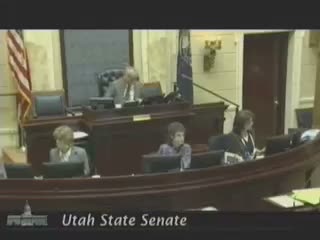
Congressman Chaffetz briefs Utah Senate on federal debt, energy and immigration
Summary
Rep. Jason Chaffetz told the Utah Senate the federal debt and entitlement spending are "trillion‑dollar problems," urged state fiscal responsibility, and fielded sustained questions on immigration reform, entitlement changes and energy policy.
Congressman Jason Chaffetz delivered a wide‑ranging congressional report to the Utah Senate and answered senators' questions about federal debt, energy policy, entitlement reform and immigration.
Chaffetz opened by framing the national budget as a crisis. "We're spending about $3,500,000,000,000 every 12 months," he said. He described a rapid rise in federal debt in recent years and warned that interest payments are a large and growing burden.
He told senators the federal government must change course on entitlements and state pension exposure. "We can't even bail ourselves out," Chaffetz said, praising states that have reformed retirement systems and urging other states to follow suit. He said congressional efforts would try to force greater transparency from states on pension liabilities.
On energy, Chaffetz criticized federal rule‑making that he said has constrained domestic production and raised costs. He said U.S. dependence on foreign oil and regulatory limits on development are long‑term concerns and urged more domestic production while saying he supports an "all‑of‑the‑above" approach including renewables.
Senators pressed him on details. Several asked whether Congress would act on immigration; Chaffetz said he hoped so and advocated fixing legal immigration rules while rejecting amnesty. "I reject amnesty," he said, adding that enforcement alone is incomplete without visa and legal‑immigration reform.
On health care and entitlement reform, Chaffetz said the solution requires structural changes to Social Security, Medicare and Medicaid and greater state control in some areas. He said some federal rules—citing the 10‑year dynamics of entitlement growth—make long‑term solvency difficult without major reform.
Senators also asked about specific federal actions such as tax provisions, medical device taxes and the timing of rule‑making by executive agencies; Chaffetz said he and other members planned incremental, item‑by‑item changes and noted some measures had bipartisan support.
The exchange lasted through a lengthy question‑and‑answer period. Chaffetz told senators he would continue to press for transparency on federal pension exposures, for changes that return authority to states where appropriate, and for legislative attention to immigration and energy policies.
The Senate thanked him and dissolved the Committee of the Whole after the presentation.