Get Full Government Meeting Transcripts, Videos, & Alerts Forever!
Get email alerts on the State Budget topic
No spam. Unsubscribe anytime.
Utah Senate approves multiple base budgets, including HB9 and substituted SB7
Summary
The Utah Senate on the floor approved House Bill 9, a base budget for the National Guard, Veterans Affairs and the Legislature, and passed first‑substitute Senate Bill 7, the higher‑education base budget, along with several other agency budget bills under suspension of the rules.
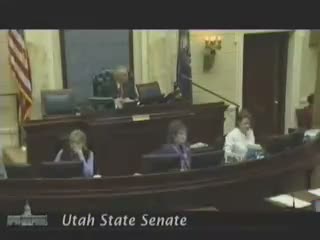
SALT LAKE CITY — The Utah State Senate on the floor on Feb. 2 advanced and passed a slate of base budget bills, including House Bill 9 and a first‑substitute of Senate Bill 7, moving significant 2011 base funding decisions toward final state approval.
Senator Cindy Hilliard, sponsor of the House Bill 9 presentation on the floor, said the chamber began with a 7 percent marker applied to executive appropriations as a starting point for the budget process. “We haven’t cut anyone’s budgets; we just have funded 93 percent,” Hilliard said in her presentation of HB9, which the Senate passed by roll call with 23 yea votes, 3 nay, and 3 absent. The bill covers base funding for the Legislature, the National Guard and veterans’ programs and will return to the House for the speaker’s signature.
Senators substituted first‑substitute Senate Bill 7 as the higher‑education base budget and debated a range of program‑level cuts across institutions. Senator Mike Eckhart, speaking for the substitute, described the package as applying a 7 percent reduction to the eight colleges and universities, a 5.9 percent cut to Utah's applied technology colleges (UCAT), and steeper reductions for statewide networks (10 percent for the Utah Education Network). “It makes a 7 percent cut for the eight institutions of higher education,” Eckhart said in presenting the substitute SB7.
Other senators pressed for preservation of applied technology and workforce‑training programs they described as having strong job placement. Senator John Stevenson pressed for attention to return on investment and completion rates in deciding which programs to restore as revenues are updated; Senator Romero argued the university system provides graduate‑level options and long‑term earning potential and cautioned against undercutting those programs. The chamber ultimately approved the substituted SB7 by roll call (21 yea, 7 nay, 1 absent) and sent it to the House for its action.
The Senate also passed first‑substitute SB8 (Natural Resources, Agriculture and Environmental Quality based budget) and SB9 (retirement and independent entities base budget) under similar suspension motions. Sponsors described the approach as a responsible starting point for the session’s work and emphasized intent to revisit priorities as updated revenue estimates become available.
The budget votes were taken under suspension of the rules to expedite floor action; Senate leaders said the initial marks are intended to be adjusted as the session proceeds and more complete revenue estimates are posted. The Senate recessed its floor work and scheduled continued budget consideration for subsequent days.