Get Full Government Meeting Transcripts, Videos, & Alerts Forever!
Get email alerts on the State Workweek topic
No spam. Unsubscribe anytime.
Senate circles bill to restore five-day state workweek after lengthy debate (HB328)
Summary
Senators debated House Bill 328, which would require state agencies to provide services five days a week, including legal and employee-impact concerns; the Senate voted to —circle— the bill for further study rather than vote on final passage.
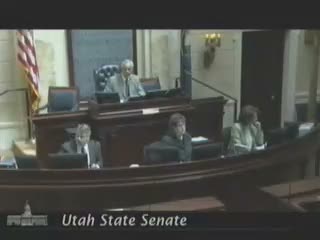
The Utah State Senate on May 6 took up House Bill 328, legislation to restore a five-day workweek for state agencies and require critical agencies to be open Monday through Friday. Sponsor Sen. Jenkins said the bill "doesn't demand" a return to a 5-day schedule for every employee but would require agencies to provide access to services five days a week.
Debate centered on two lines of concern. Supporters said taxpayers deserve consistent five-day access to services and noted that agencies can retain flexible schedules for employees: "It requires that they be open 9 hours ... If those agencies choose to allow their employees flexibility ... they have that option," Sen. Dainen said. Opponents warned the change would disrupt employees who had rearranged childcare and other family responsibilities around a four-day schedule and questioned whether claimed savings from the four-day week were accurate. Sen. Romero urged waiting until the next general session to study implementation, and Sen. Robles raised practical concerns about childcare and access to special programs.
Legal questions were also raised. Sen. Ballantine and others reviewed constitutional provisions related to an 8-hour workday (Article 16) and an Energy Emergency Powers Act that governed past emergency work-week changes; senators noted Utah lacks case law on the constitutional question and that other states— experience differed.
After extended discussion, the Senate approved a motion to circle HB328 for further study rather than immediately override the governor's veto or pass the bill. Proponents and opponents asked for additional interim study of fiscal impacts, employee consequences and constitutional questions before revisiting the measure.