Get Full Government Meeting Transcripts, Videos, & Alerts Forever!
Get email alerts on the Transportation Funding topic
No spam. Unsubscribe anytime.
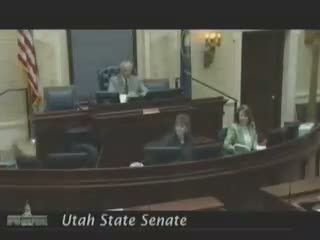
Senate overrides governor, approves transportation funding revisions (SB229)
Summary
The Utah State Senate voted 21–3 (4 absent) on May 6, 2011, to override Gov. Gary Herbert—s veto of Senate Bill 229, a measure to redirect portions of sales-tax growth to transportation projects with a cap tied to the Transportation Investment Fund.
The Utah State Senate on May 6 voted to override Gov. Gary Herbert—s veto of Senate Bill 229, a transportation-funding package the sponsor said would stabilize long-term road investment by diverting a portion of sales-tax growth into the Transportation Investment Fund. Under a roll-call vote, the override passed 21 yes, 3 no, with 4 senators absent.
Sen. Adams, the bill—s sponsor, told colleagues the measure "does 4 basic things" and that it would allow the state to fund transportation projects while creating a rainy-day mechanism for infrastructure. Adams said the bill takes "30%" of the growth portion of sales-tax revenue (not base revenue) and that the transfer is capped when the Transportation Investment Fund reaches 17% of the general-fund allocation: "30% is simply the growth ... It doesn't take anything out of the current budget, out of the base budget." He said the bill would not immediately extract funds—it does not take effect until 2013—and argued it provides "structural stability."
Opponents criticized the proposal as an expansion of earmarks that would constrain the appropriations process. Sen. Valentine, who said he had voted no on the bill previously, warned that the state has accumulated many earmarks and that setting aside specific revenue in statute can limit future budget flexibility: "These earmarks are sometimes from the surplus. They're sometimes taking our general fund and setting it aside so that we cannot appropriate it." Several senators, including Sen. Romero and Sen. Jones, said the bill risks prioritizing roads over other needs such as education, health and local road maintenance. Sen. Okerlund urged more emphasis on maintenance, warning reconstruction costs could far exceed preventive repairs.
Supporters defended the bill as a way to set policy priorities. Sen. Dayton invoked historical precedent for earmarks, saying the state once dedicated income tax revenue to education during the Depression and that setting priorities is appropriate when the legislature chooses to do so.
After the vote the clerk announced SB229 "received 21 yay votes, 3 nay votes and 4 were absent" and said the bill will be forwarded for enrollment and transmission to the lieutenant governor.
Other floor actions that day included suspending readings and placing related veto messages on the journal, and moving two additional Senate bills (SB294 and SB305) to be circled for later action.