Get Full Government Meeting Transcripts, Videos, & Alerts Forever!
Get email alerts on the Congressional Redistricting topic
No spam. Unsubscribe anytime.
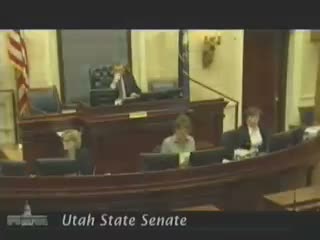
Senate concurs with House on 19th substitute to congressional map after heated debate, 20–5
Summary
After several hours of debate, the Utah Senate on Oct. 13, 2011, concurred with the House on the 19th substitute to Senate Bill 3,002 (congressional boundaries), passing the substitute by a 20–5 vote with four absent amid criticism that the late changes split cities and disenfranchised communities.
The Utah Senate voted on Oct. 13 to concur with the House’s 19th substitute to Senate Bill 3,002, the congressional boundaries measure, after extended floor debate about process and community splits. The motion to concur passed 20–5 with four senators absent; the measure was prepared for transmittal to the governor.
Senator R. Okerlund, sponsor of the original maps, told the Senate the House substitute adds rural territory to District 4, makes targeted adjustments in Districts 2 and 3 (including Sanpete and Emery counties) and attempts to keep communities such as Holiday, Mill Creek and most of Salt Lake City whole. “This map does that,” Okerlund said, urging concurrence on the substitute and saying the changes seek to minimize population deviation and reflect public input.
But opponents on the floor said the late changes—introduced in the House at 8:13 p.m. and passed by 9:48 p.m., according to comments on the floor—affected hundreds of thousands of residents and split major cities. Senator Mike McAdams, a member of the redistricting committee, criticized the process as secretive and partisan, saying the House changes “affected 350,000 people” and charged that the result amounted to dividing voters “because we don't like how you use your vote.” He said he would vote no. Senator Romero likewise voiced strong opposition, saying the substitute “decimates Utah's cities, counties and communities” and urged the governor to consider a veto.
Supporters, including Senator Hilliard and Senator Niederhauser, defended the process as broadly inclusive, pointing to public hearings, submitted maps and committee deliberations. They emphasized the legal constraint of equal-population districts and framed the substitute as a compromise that balances urban and rural interests.
After the roll call the clerk announced the 19th substitute to SB3,002 passed with 20 yeas, 5 nays and 4 absent. The Senate appointed members to visit the governor and the House as part of the post-vote process, and leadership said the enrolled bill would be signed in open session and returned to the House for final enrollment steps.
Critics on the floor requested that the governor weigh public concern; supporters urged that the map represents the best practicable compromise given constitutional population requirements and the tight timetable of the special session.