Get Full Government Meeting Transcripts, Videos, & Alerts Forever!
Get email alerts on the Senate Redistricting topic
No spam. Unsubscribe anytime.
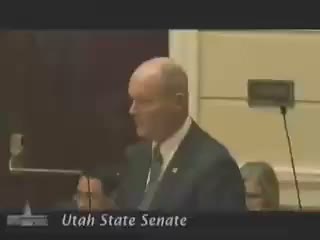
Senate approves new state Senate map after debate over communities of interest
Summary
The Utah Senate passed first substitute Senate Bill 3,001, advancing a 29‑district state Senate map the committee said balances population shifts and neighborhood lines; opponents argued the plan splits communities and forces incumbents into the same district. The bill will be forwarded to the House.
The Utah Senate approved first substitute Senate Bill 3,001 on a roll‑call vote after two hours of debate over communities of interest and technical boundary adjustments.
Unidentified Speaker 1, the sponsor presenting the committee map, said the plan was built from extensive public input and aimed to satisfy the constitutional ‘‘one person, one vote’’ requirement by matching districts to census growth. ‘‘We believe that we have a very good and fair map that presents 29 districts,’’ the sponsor said during opening remarks. He noted large growth in Utah and Wasatch counties and described efforts to keep deviations to a few people per district.
Opponents raised concerns that the map splits neighborhoods and reduces cohesive representation. An unnamed senator who rose to oppose the bill said the map ‘‘will in essence take out one Senate Democrat’’ by placing two incumbents in the same district. Another member representing Rose Park said the community would be divided and worried that social, economic and educational interests there would not be adequately represented under the new lines.
Supporters and several members who serve on the redistricting committee defended the map as a compromise that corrected technical problems—such as precincts or individual homes split across districts—after committee review. Committee members described more than 100 minor boundary adjustments made after reviewing aerial maps to avoid cutting through houses and small subdivisions.
The Senate moved under suspension of the rules to consider the bill for final passage. The clerk recorded the vote as 25 yea, 1 nay and 3 absent; the bill will be forwarded to the House for further action.
What happens next: Because the measure passed the Senate, it will be transmitted to the Utah House of Representatives, where members may amend, substitute or reconsider the congressional and legislative boundary language. If enacted, the map would govern elections for the next decade and trigger staggered election timing adjustments noted by the sponsor for districts affected by interim appointments.