Get Full Government Meeting Transcripts, Videos, & Alerts Forever!
Get email alerts on the Public Lands topic
No spam. Unsubscribe anytime.
Senate Advances Transfer-of-Public-Lands Bill After Contentious Debate Over Litigation Risk
Summary
Senate amended and advanced House Bill 148, the Transfer of Public Lands Act, which would direct Utah to seek transfer of most federal lands and create a Public Lands Commission; sponsors said a constitutional-defense council will study next steps, while critics warned the measure invites costly litigation.
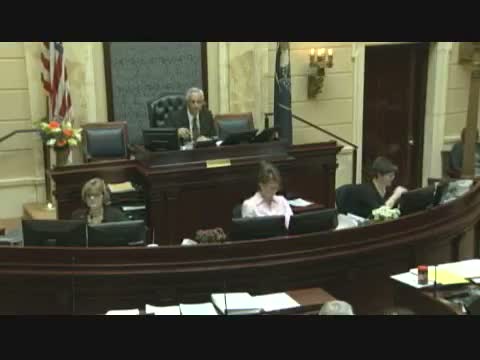
House Bill 148, the Transfer of Public Lands Act, was debated at length on the Utah Senate floor and amended before being advanced for third reading.
Senator Chris Niederhauser, sponsor of HB 148, moved Amendment 1 to exclude national parks, monuments and designated wilderness from lands that would be targeted for state title transfer. Niederhauser said the bill sets a hard deadline — "to transfer title to all public lands in Utah by 12/31/2014" — and charges the Constitutional Defense Council (CDC) with drafting enabling legislation and a plan for managing transferred lands. He told colleagues the plan would address "open space, access, local control, and sustainable yield of abundant natural resources." Representative language in the bill also would dedicate 5 percent of sale proceeds to a state permanent school fund and return 95 percent to the United States, the sponsor said.
Opponents raised constitutional concerns and practical costs. Senator Romero cited the bill's constitutional note and said the measure "likely is unconstitutional" and would provoke litigation that the state is likely to lose. Other senators asked whether the Public Lands Commission would be created regardless of litigation and probed how the state's congressional delegation had been engaged; Niederhauser responded that Utah lawmakers had approached members of the state's congressional delegation, who he said were "supportive of this effort." Senator Jones asked whether filings and lawsuits were anticipated and where legal costs would come from; Niederhauser said the CDC already has some funding and that further legislative action could increase resources to pursue legal remedies.
Several senators described historical and legal contexts. Senator Brown (in debate) traced the history of federal land disposal and the Enabling Act, which he called a contractual promise. Brown outlined a two-step litigation approach: a declaratory-judgment action on state rights followed, if successful, by a damages or remedy phase.
After extended debate and the amendment vote, the Senate took a roll-call vote to read HB 148 for a third time. The bill passed the Senate vote 22'yea, 7'nay, and will be placed on the third-reading calendar.
What happens next: the bill directs the CDC to study implementation options and to prepare proposed legislation to create a Utah Public Lands Commission and to coordinate with federal authorities; the Senate record shows continuing disagreement about the bill's constitutionality, the likelihood of litigation, and the use of taxpayer funds for legal action.
Quote: "We're charging the CDC ... to prepare legislation creating a Utah public Lands Commission to manage the multiple use of the public lands," said Senator Niederhauser.