Get Full Government Meeting Transcripts, Videos, & Alerts Forever!
Get email alerts on the Legislative Votes Roundup topic
No spam. Unsubscribe anytime.
Senate floor roundup: bills passed and referred to the House
Summary
The Utah Senate passed multiple bills and resolutions on day 30, including HB97 (racketeering amendments), SB127 (prescriber training), SB60 (emergency response fees), SB41 (tanning minors), SB172 (successor corporation asbestos liability), SB193 (local government bonding), and SJR13 (Social Security resolution). Votes and brief descriptions are listed.
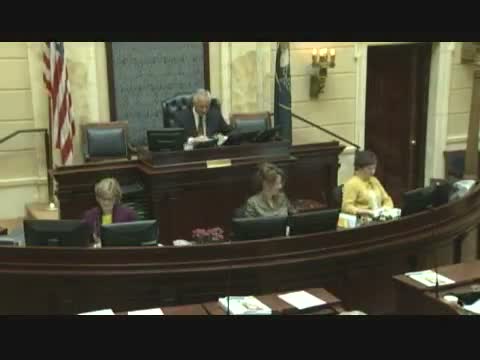
The Utah Senate conducted a series of votes and forwarded multiple measures to the House during the 30th day of the session. Below are the principal outcomes and brief descriptions based on floor actions:
- House Bill 97 (Racketeering amendment): Adds human trafficking, human smuggling and aggravated human trafficking to the list of offenses that can constitute racketeering when conducted as a pattern. Vote recorded: unanimous among those present (23 yea, 0 nay; 6 absent). (Consent calendar)
- Senate Bill 197 (Attorney General retirement language): Removes language that mandated a retirement age for employees in the Attorney General’s Office to comply with federal age-discrimination laws. Vote recorded: 25 yea, 0 nay; 4 absent.
- Senate Bill 273 (Surplus property amendments): Expands permissible uses of surplus property to include facilities that promote job creation, industrial/office uses, parking, and charter schools. Passed (26 yea, 0 nay; 3 absent).
- First substitute Senate Bill 127 (Controlled substances prescriber training): Updates prior continuing-education/training frameworks for prescribers of pain medications and coordinates federal wording; sponsor noted dentists are excluded from this bill’s requirements. Passed (27 yea, 0 nay; 2 absent).
- Senate Bill 60 (Traffic accident emergency response fees): Prohibits charging a fee merely for showing up to an emergency while allowing recovery of actual incurred costs. Passed (26 yea, 0 nay; 3 absent).
- First substitute Senate Bill 25 (Driver license and ID card amendments): Alters the availability of separate driver’s licenses and state ID cards to meet federal document standards for travel and federal interactions; passed (27 yea, 0 nay; 2 absent).
- First substitute Senate Bill 101 (Acupuncture licensing act amendments): Adjusts board composition to include more acupuncturists and other members; passed (27 yea, 0 nay; 2 absent).
- First substitute Senate Bill 172 (Successor corporation asbestos-related liability): Limits successor-corporation liability for pre-existing asbestos claims to the fair-market value of transferred assets and the legislature adopted related intent language explaining the public necessity. Passed (22 yea, 0 nay; 7 absent).
- First substitute Senate Bill 193 (Local government bonding act amendments): Tolling of the 10‑year voter-authorized bond issuance period while litigation or challenges are pending; passed (21 yea, 0 nay; 8 absent).
- Senate Joint Resolution 13 (Social Security joint resolution): Floor debate included concerns over the trust-fund treatment and proposals for entitlement reform; passed (20 aye, 4 nay; 5 absent).
- Senate Bill 41 (Regulation of tanning facilities affecting minors): After substitute motions and a roll-call division, the Senate adopted the fifth substitute and passed the bill (18 yea, 9 nay; 2 absent). See separate coverage for the substantive debate.
Several other bills and resolutions were introduced for referral to committee (e.g., SB226, SB234, SB264). Where roll-call tallies are recorded in the transcript they are reflected above; when only voice or summary tallies were used the transcript's recorded counts are reported.