Get Full Government Meeting Transcripts, Videos, & Alerts Forever!
Get email alerts on the Session Roundup topic
No spam. Unsubscribe anytime.
Utah Senate approves large consent calendar, dozens of bills pass with broad support
Summary
On Feb. 28, 2012, the Utah Senate approved a long consent calendar and several contested measures. Dozens of bills — including measures on police K-9 rights, municipal authority, education, and tax credits — cleared the Senate and were sent to the House; several bills drew debate and closer votes.
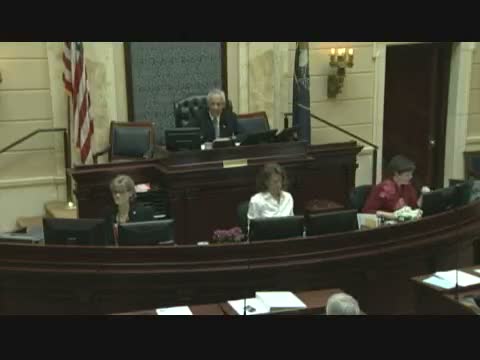
The Utah Senate convened Feb. 28, 2012, and adopted a lengthy consent calendar and multiple substantive bills, forwarding them to the House for the next step in the legislative process.
The consent calendar included measures on municipal authority, public education, health, and administrative procedures. Notable items passed on unanimous or near-unanimous votes: Senate Bill 259 (police service K-9 rights) passed 28–0 with one absent after sponsor Sen. Adams said the bill allows police service dogs the same access protections used for service animals; first substitute House Bill 301 (National Guard nonjudicial punishment) passed 27–0–2; Senate Bill 199 (motor vehicle selling and titling requirements) passed 26–0–3; and Senate Bill 277 (municipal government authority) passed 27–0–2.
Other measures moved forward on the consent or concurrence calendars, including HCR 9 (recognizing Ducks Unlimited’s 75th anniversary, passed 28–0–1), HB 195 (petroleum and underground storage tank fees, 27–0–2), HB 383 (international residential code amendments, 27–0–2), HB 190 (Nurse Midwife Practice Act technical fix, 27–0–2), and SB 48 (mission of public education concurrence, 24–0–5).
Some bills drew amendments on the floor before passage. Sen. Stevenson successfully offered an amendment to SB 223 (Pledge of Allegiance amendments) clarifying that students must be instructed at least once yearly that participation in the pledge is voluntary; the amended bill passed 28–0–1. Sen. Hilliard replaced an earlier amendment to SB 98 (handheld wireless device prohibition while driving) with a clarification that prohibited texting requires the device to be in hand and actively inputting information; that bill passed on a recorded vote of 21–4–4.
The Senate also adopted committee reports and reassigned at least one bill (SB 276) to the Revenue and Taxation Committee. At adjournment the body recessed to 2 p.m. for the afternoon session.
Votes at a glance (selected outcomes reported on the Senate floor): SB 259 — passed 28–0–1; HB 301 (1st sub) — passed 27–0–2; SB 199 — passed 26–0–3; SB 277 — passed 27–0–2; HCR 9 — passed 28–0–1; HB 195 — passed 27–0–2; HB 383 (1st sub) — passed 27–0–2; HB 190 (1st sub) — passed 27–0–2; SB 48 (concurred) — passed 24–0–5; SB 180 (3rd sub) — passed 29–0–0; SB 223 (amended) — passed 28–0–1; SB 98 (amended) — passed 21–4–4; SB 87 (1st sub) — passed 24–0–5; SB 209 (1st sub) — passed 25–0–4; SB 190 — passed 25–0–4; SB 85 (2nd sub) — passed 17–12–0.
The calendar combined many noncontroversial technical fixes and ceremonial resolutions with a small set of debated policy bills that required floor amendments or narrower margins. Several measures were circled or substituted for later final debate. The Senate recessed until 2 p.m. to continue work.