Get Full Government Meeting Transcripts, Videos, & Alerts Forever!
Get email alerts on the Budget Constraints topic
No spam. Unsubscribe anytime.
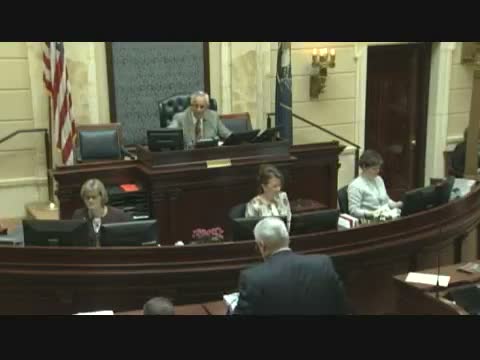
Senate approves first substitute to spending‑limits resolution after heated floor debate, 16–13
Summary
On Day 31 the Utah Senate passed the first‑substitute version of SJR22, a measure that would require a three‑fifths legislative vote for appropriations affected by tax revenue and assigns statutory flexibility for reserve and debt priorities; the resolution passed 16–13 after extended debate over comparisons to TABOR and constitutional rigidity.
The Utah State Senate adopted a first substitute to Senate Joint Resolution 22 — a proposed constitutional spending limitation — after extended floor debate, passing the measure on third reading by a 16–13 vote.
Senator Reid, who sponsored the substitution, told colleagues the proposal "will require a 3 fifths vote, both in the House and the Senate, to pass appropriation bills as affected by tax revenue," and said the measure also directs the legislature to set by statute how much revenue must go to debt service, budget reserves and emergency reserves. He described the substitute as giving the legislature latitude to pick a five‑year base year and to exclude funds associated with transferred services from the three‑fifths ceiling.
Supporters framed the resolution as a tool to enforce priorities and prevent automatic spending increases as revenues rise. Senator Stevenson called it "a reasonable approach" to hold the legislature accountable and to avoid defaulting to tax increases as federal funds ebb.
Opponents pushed back sharply. Several senators compared the proposal to Colorado’s Taxpayers Bill of Rights (TABOR) and warned that constitutional spending constraints can produce unintended consequences. Senator Jones said business and education in Colorado were harmed by TABOR and urged caution; Senator Hilliard cautioned that embedding limits in the constitution could prevent future flexibility and adaptation.
Senators also debated the mechanics: how the base year would be chosen, whether statutory priorities for surplus funds (debt, rainy‑day funds, tax refunds) belong in constitutional text, and the political dynamics of requiring a supermajority. Senator Madsen urged keeping the resolution "clean" by removing provisions she described as potentially distracting or harmful to later voter understanding.
After the debate, the clerk announced the third‑reading result: 16 yea, 13 nay. The presiding officer placed the passed resolution at the bottom of the third‑reading calendar for subsequent processing.
What it means: As a joint resolution proposing a constitutional change, SJR22 will require the next steps specified in state process to advance beyond the legislature and — if adopted by the legislature in the required form — to a ballot or further consideration consistent with constitutional amendment rules.
Direct quotations are from senators speaking on the Senate floor during the recorded session and appear as read into the record.
The resolution and the accompanying floor debate are recorded in the Senate transcript for Day 31.