Get Full Government Meeting Transcripts, Videos, & Alerts Forever!
Get email alerts on the Medicaid Pharmaceutical Policy topic
No spam. Unsubscribe anytime.
Senate rejects expansion of Medicaid preferred drug list to include mental-health drugs
Summary
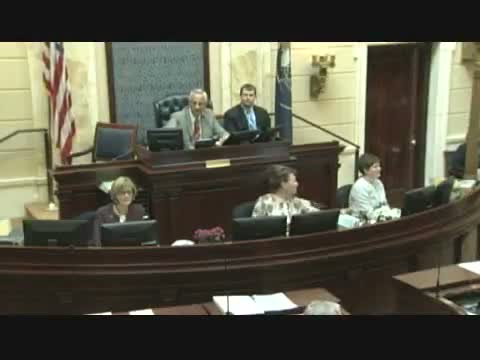
After a contentious floor debate over clinical safeguards and cost savings, the Senate voted down first substitute SB 85 (Medicaid cost control amendments), which would have extended the state's preferred drug list to mental-health medications; vote: 6 yeas, 18 nays, 5 absent.
Senator Christensen presented first substitute SB 85, an extension of Utah's preferred drug list (PDL) to include certain mental-health medications for Medicaid patients. Christensen said the PDL had exceeded initial savings estimates and could yield additional savings by designating preferred drugs and obtaining rebates from manufacturers.
"We thought we were going to get $6,000,000 to $8,000,000. Since last year, we got $27,000,000 worth of savings," Christensen said, urging inclusion of mental-health drugs and noting safeguards and exceptions in the bill for patients who are grandfathered in or for whom the preferred drug is clinically inappropriate.
Opponents raised clinical concerns. Senator Knudson, who serves on the Drug Utilization Review (DUR) board, argued psychiatric conditions often require specificity: "Not every person diagnosed as bipolar or schizophrenic reacts the same way to the same medication. There is a specific medication for some patients that is effective." Senator Davis noted a prior agreement when the PDL was adopted that psychotropic medications would be excluded and urged keeping that promise.
Supporters countered that other states include mental-health drugs in PDLs and that processes exist to move patients to non-preferred medications when clinically necessary. Senator Hilliard said his personal experience with a PDL made him comfortable with the idea and noted mechanisms to access non-preferred medications when needed.
After debate and summations, the Senate recorded a roll call (SEG 1050—1052): the first substitute SB 85 received 6 yea votes, 18 nay votes and 5 absent; the motion failed and the bill was filed.