Get Full Government Meeting Transcripts, Videos, & Alerts Forever!
Get email alerts on the Social Security topic
No spam. Unsubscribe anytime.
Utah Senate backs resolution urging Social Security reforms after floor debate
Summary
The Utah Senate passed a nonbinding resolution urging Congress to pursue Social Security reforms, after a lengthy floor debate about trust-fund solvency, means testing and raising the taxable earnings cap; the measure passed 21–3 and will be sent to Utah's congressional delegation.
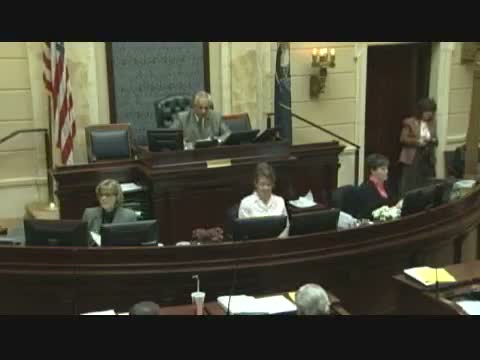
The Utah Senate on Feb. 21 adopted a nonbinding resolution urging Congress to pursue measures to shore up Social Security’s long-term finances, voting 21–3 to send the statement to members of Utah’s congressional delegation.
Senator Stephen Valentine, sponsor of Senate Joint Resolution 13, said the resolution is intended to press for reforms to make the system actuarially sound. “We are living longer and have far fewer workers supporting each beneficiary,” Valentine said, arguing the resolution lists options — including raising retirement age and adjusting benefit levels — that he said should be on the table.
The resolution drew sustained debate on the floor. Senator Romero said she opposed the measure because it focuses on benefit cuts without equal attention to revenue increases, calling the package “not balanced.” Senator Dayton said she would support the resolution but worried it did not give workers the option to invest their payroll contributions individually.
Senator Anderson asked whether the reform measures address the maximum taxable earnings cap for Social Security (then cited at about $110,000). Valentine replied that the proposal preserves and slightly adjusts the indexing of the wage base so the cap continues to grow and contributes to actuarial soundness.
Valentine framed the resolution as a bipartisan push that would be forwarded to the majority leader of the U.S. Senate, the speaker of the U.S. House, the Social Security Administration and Utah’s congressional delegation. Opponents cautioned that the resolution leans toward cutting future benefits rather than pairing cuts with revenue increases.
After summation and a roll-call vote, the chamber placed the resolution at the bottom of the third-reading calendar. The recorded vote was 21 yeas, 3 nays and 5 absent.