Get Full Government Meeting Transcripts, Videos, & Alerts Forever!
Get email alerts on the Floor Session Roundup topic
No spam. Unsubscribe anytime.
Utah Senate advances a wide slate of bills; several transparency and veterans measures move to House
Summary
At a floor session starting at 10:02 a.m., the Utah State Senate advanced multiple bills to the House, including measures on federal‑fund transparency, financial institution regulation, veterans services coordination, and a package of technical and public‑safety updates. Several bills passed unanimously or with near‑unanimous votes.
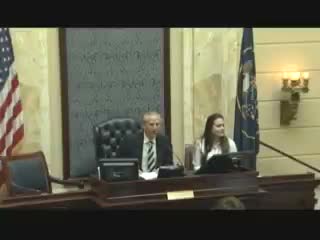
The Utah State Senate met for a floor session beginning at 10:02 a.m. and moved a large number of bills through committee and to the House for consideration, acting on measures ranging from budget transparency to licensing and veterans services.
The Senate adopted a Rules Committee report assigning dozens of bills to standing committees, then took up third‑reading items and other calendar business. Several measures received full floor consideration and passed by roll call. Notable outcomes included SB 130 (Security Personnel Licensing Act amendments), which passed 26‑0 with three senators absent; SJR 7 (a joint rules resolution on federal revenue estimates) passed 28‑0 with one absent; SB 138 (requiring the governor’s budget to include federal‑fund estimates) passed 27‑0 with two absent; and SB 141 (education contribution on tax returns) passed 26‑0 with three absent.
Other bills advanced included SB 150 (Financial Institution Amendments), described by the sponsor as a cleanup and modernization package that eliminates an obsolete savings‑and‑loan charter and creates a money‑services business supervisory framework; the Senate approved SB 150, 27‑0 with two absent. SB 53 (Intergenerational Welfare Reform) — which would form a multi‑agency commission to coordinate services addressing intergenerational poverty — passed 26‑0 with three absent. SB 153 (local government development amendments) and SB 101 (water‑law clarifications) were also advanced.
The body also read several House bills for a third time. HB 12 (alarm company employee licensing) was amended to limit licensing to employees with direct access to premises and was read for a third time after floor discussion; HB 18 (campaign finance reporting penalties) was read for a third time, clarifying a $100 fine for late filings and recorded with a roll call of 26‑1‑2 (yea‑nay‑absent).
Veterans services coordination was a substantive item on the calendar: the first substitute for SB 126 would create a veterans services coordinator and require participating state agencies to assign veteran service specialists and share non‑protected data to improve service navigation. The substitute passed by roll call 27‑0 with two absent.
Several technical, public‑safety and regulatory bills also moved forward, including SB 13 (ignition interlock program amendments), SB 135 (procedural notice changes linked to involuntary commitment proceedings), and HB 26 (Inmate Medical Donation Act), which would allow inmates to sign organ‑donor designations.
Floor debate was generally brief and procedural, with sponsors answering targeted questions and several bills described as technical or consensus items. The Senate concluded its calendar business and adjourned until 10:00 a.m. the next day.
Votes at a glance (selected items, roll‑call tallies as recorded on the floor):
- SB 130 — Passed 26 yea, 0 nay, 3 absent; referred to House. Sponsor: Senator Dayton. - SJR 7 — Passed 28 yea, 0 nay, 1 absent; referred to House. Sponsor: Senator Harper. - SB 138 — Passed 27 yea, 0 nay, 2 absent; referred to House. Sponsor: Senator Harper. - SB 141 — Passed 26 yea, 0 nay, 3 absent; referred to House. Sponsor: Senator Thatcher. - SB 150 — Passed 27 yea, 0 nay, 2 absent; referred to House. Sponsor: Senator Adams. - SB 53 — Passed 26 yea, 0 nay, 3 absent; referred to House. Sponsor: Senator Reid. - SB 153 — Passed 28 yea, 0 nay, 1 absent; referred to House. Sponsor: Senator Adams. - SB 101 — Read for third: 25 yea, 0 nay, 4 absent; advanced. Sponsor: Senator Dayton. - SB 135 — Read for third: 24 yea, 0 nay, 5 absent; advanced. Sponsor: Senator Weiler. - SB 13 — Read for third: 25 yea, 0 nay, 4 absent; advanced. Sponsor: Senator Thatcher. - HB 12 — Read for third: 27 yea, 0 nay, 2 absent; advanced. Sponsor: Senator Valentine. - HB 18 — Read for third: 26 yea, 1 nay, 2 absent; advanced. Sponsor: Senator Dayton.
What’s next: Most bills were transmitted or scheduled to be sent to the House. Several measures described as technical or consensus items were advanced with little floor debate; bills with substantive policy implications (budget‑related transparency and veterans coordination) drew short floor exchanges and proponents emphasized improved coordination and transparency as the primary goals.
Sources: Floor remarks and roll‑call tallies during the Utah State Senate floor session.